
DSIP
5mg per vial
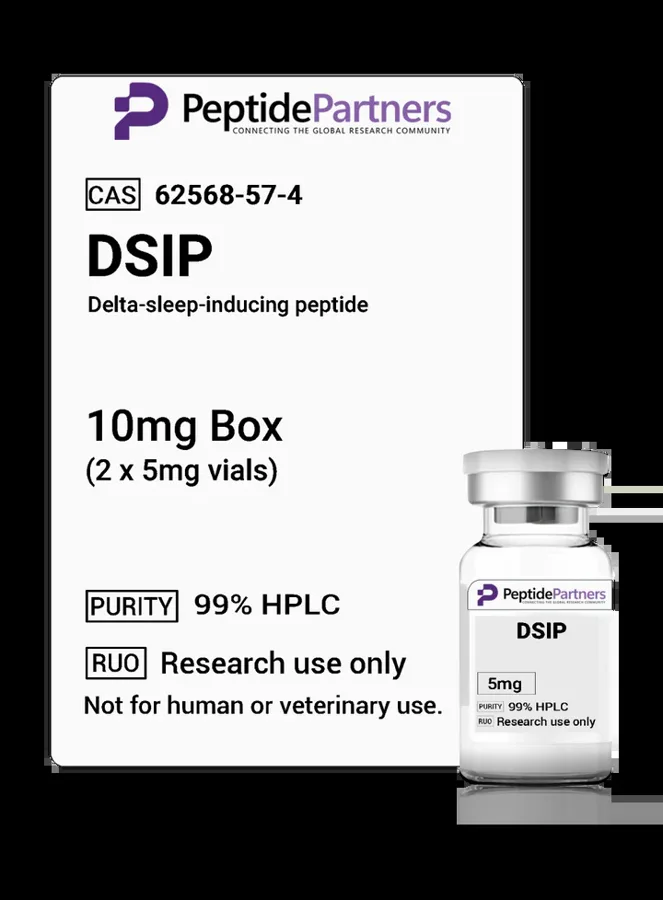
Available packs
DSIP
$75 - $305
Buy DSIP (5mg vials) from Peptides Partners
Investigators seeking Delta Sleep-Inducing Peptide for analytical, cellular, or animal model studies can buy DSIP from Peptides Partners to support reproducible and rigorous scientific inquiry. DSIP is supplied in lyophilized form within sealed, sterile 5mg glass vials designed to maintain compound stability during transit and storage. As one of the foundational research peptides examined in the fields of neurochemistry, chronobiology, and peptide pharmacology, DSIP remains an active subject of ongoing laboratory investigation. Peptides Partners supplies authenticated biochemical reagents strictly intended for laboratory experimentation and in vitro or preclinical testing.
Securing high-grade reagents is critical when investigating complex physiological cascades such as sleep architecture, neuroendocrine signaling, and cellular stress adaptation. At Peptides Partners, every batch of DSIP (CAS: 62568-57-4) is manufactured under precise conditions to meet stringent laboratory standards, ensuring researchers receive nonapeptide formulations free from confounding contaminants or synthesis artifacts. Whether your research group is running baseline chromatographic assays, evaluating hypothalamic tissue cultures, or conducting multi-week behavioral rodent paradigms, Peptides Partners provides scalable pack configurations to accommodate diverse experimental timelines and budgetary requirements.
When you buy DSIP for scientific investigation, having access to consistent product specifications facilitates standardization across iterative trials. Research peptides require careful physical handling and dependable synthesis to prevent sequence degradation, peptide aggregation, or truncation. By sourcing through Peptides Partners, principal investigators and academic institutions benefit from focused customer support, transparent packaging specifications, and reliably characterized research peptides delivered straight to the laboratory bench.
What is DSIP?
Delta Sleep-Inducing Peptide, commonly abbreviated as DSIP, is an endogenous regulatory nonapeptide with the sequence Trp-Ala-Gly-Gly-Asp-Ala-Ser-Gly-Glu (H-Trp-Ala-Gly-Gly-Asp-Ala-Ser-Gly-Glu-OH). It carries a chemical CAS registry number of 62568-57-4 and possesses a molecular weight of approximately 848.81 g/mol, with an empirical formula of C35H48N10O15. The peptide was initially isolated in the mid-1970s by a Swiss research group led by Marcel Monnier and Guido Schoenenberger, who extracted it from the cerebral venous blood of rabbits subjected to low-frequency electrical stimulation of the thalamus during induced slow-wave sleep states.
Structurally, DSIP is an acidic peptide characterized by its terminal tryptophan residue at the N-terminus and a glutamic acid residue at the C-terminus, interspersed with small aliphatic and polar amino acids such as alanine, glycine, aspartic acid, and serine. This specific arrangement gives the peptide distinct conformational flexibility in aqueous solutions, allowing it to adopt multiple transient conformations depending on local pH, ionic strength, and divalent cation concentration. Unlike many classical neuropeptides that act primarily via single, high-affinity G-protein coupled receptors (GPCRs), DSIP exhibits atypical biological profiles that have led researchers to classify it as a modulatory peptide or neuromodulator rather than a conventional primary neurotransmitter.
In endogenous systems, molecules related to DSIP immunoreactivity have been detected across various mammalian tissues, including the hypothalamus, pituitary gland, limbic structures, pineal gland, and peripheral organs such as the gut and adrenal medulla. It has also been detected in cerebrospinal fluid (CSF) and systemic circulation. Because of its relatively small size and linear sequence, DSIP is subject to enzymatic cleavage by several circulating and tissue-bound peptidases, including aminopeptidases and endopeptidases. As a result, synthetic analogs, phosphorylated variants (such as phosphorylated DSIP or P-DSIP), and stabilized forms have frequently been synthesized to study its structure-activity relationship (SAR) in isolated biological systems.
Research effects studied
Since its initial characterization, DSIP has generated extensive scientific interest across numerous neurobiological, endocrine, and metabolic domains. Published preclinical research and laboratory evaluations have explored several core physiological and biochemical mechanisms associated with this unique nonapeptide:
- Modulation of Slow-Wave Sleep and EEG Delta Rhythms: The hallmark historical property of DSIP, which gave the molecule its name, is its ability to influence electroencephalographic (EEG) activity in laboratory animals. Preclinical research in rabbits, rats, cats, and non-human primates demonstrated that administration of DSIP could enhance the presence of synchronized slow-wave (delta band, 0.5–4 Hz) activity without disrupting the underlying physiological architecture of rapid eye movement (REM) or non-REM sleep stages. Unlike classical sedative-hypnotic compounds, DSIP has been observed to act in a modulatory manner, exerting more pronounced effects when endogenous sleep pressures or circadian rhythms are perturbed.
- Neuroendocrine Regulation and HPA Axis Modulation: Studies examining neuroendocrine dynamics have observed interactions between DSIP and the hypothalamic-pituitary-adrenal (HPA) axis. In in vitro hypothalamic explants and rodent models, DSIP has been studied for its capacity to moderate corticotropin-releasing hormone (CRH) output, thereby altering downstream adrenocorticotropic hormone (ACTH) and corticosterone secretions under acute stress paradigms. Additional studies have assessed its influence on luteinizing hormone (LH), growth hormone (GH), and somatostatin transcription and release, suggesting a broader role in central endocrine homeostasis.
- Antioxidant and Cellular Stress Adaptation: Beyond its central nervous system neuromodulatory properties, DSIP has been investigated for its capacity to reduce cellular markers of oxidative stress. Preclinical studies have evaluated its influence on endogenous antioxidant enzyme systems, including superoxide dismutase (SOD), catalase, and glutathione peroxidase. Research literature has documented that exposure to DSIP or its peptide fragments can attenuate lipid peroxidation and mitochondrial reactive oxygen species (ROS) generation in brain tissues subjected to ischemic or hypothermic challenges.
- Thermoregulation and Autonomic Stability: Experimental models exploring environmental stress, such as severe cold exposure, physical restraint, or hypoxia, have utilized DSIP to evaluate autonomic responses. Researchers have documented changes in core body temperature dynamics, peripheral vascular resistance, and metabolic heat conservation mechanisms in subjects treated with the peptide prior to environmental stressors.
- Neuromodulation and Neurotransmitter Turnover: Investigative assays focusing on monoaminergic and amino acid neurotransmission have identified DSIP-induced changes in the turnover rates of serotonin (5-HT), dopamine, and gamma-aminobutyric acid (GABA). Research indicates that DSIP may alter membrane fluidity and the sensitivity of central NMDA and GABA-A receptor complexes, pointing toward potential neuroprotective actions during episodes of neurotoxic or metabolic insult.
How to use in the laboratory
DSIP is supplied exclusively for in vitro laboratory research and controlled preclinical investigation. It is not approved, formulated, or intended for any clinical, diagnostic, therapeutic, or human in vivo applications. To maintain experimental precision and the chemical integrity of the peptide, laboratories must implement standardized reconstitution and handling methodologies.
Reconstitution of DSIP (5mg vials) should take place inside an aseptic environment, such as a certified laminar flow hood or biosafety cabinet, utilizing sterile techniques throughout the procedure. Before introducing any liquid diluent, allow the lyophilized vial to equilibrate to room temperature (typically 20°C to 25°C) for 20 to 30 minutes. This step prevents moisture condensation on the lyophilized cake upon opening the seal, which could induce premature hydrolytic cleavage.
Common laboratory diluents suitable for reconstituting DSIP include:
- Sterile, analytical-grade deionized water (ddH2O)
- Bacteriostatic water containing 0.9% benzyl alcohol (for multi-draw laboratory testing)
- Sterile 0.9% sodium chloride (normal saline) solution
- Phosphate-buffered saline (PBS, pH 7.2–7.4) for tissue culture or physiological assay mediums
When introducing diluent, direct the stream down the interior glass wall of the vial rather than shooting it directly onto the lyophilized powder. For example, adding 1.0 mL of diluent produces a stock solution concentration of 5.0 mg/mL, whereas adding 2.0 mL yields a working concentration of 2.5 mg/mL. Once the diluent is added, allow the peptide to hydrate naturally for several minutes. Gently rotate or swirl the vial until the cake is fully dissolved. Do not shake, vortex aggressively, or subject the solution to mechanical shear stress, as rapid agitation can promote structural unfolding, peptide shearing, or precipitate formation.
Following complete solubilization, it is standard laboratory practice to aliquot the stock solution into sterile, low-protein-binding microcentrifuge tubes (polypropylene) according to anticipated single-experimental volume requirements. Dividing the solution into aliquots prevents the degradation associated with repeated freeze-thaw cycles. Every laboratory aliquot must be labeled with the compound name, concentration, reconstitution date, lot number, and technician initials, and logged immediately into the facility’s laboratory information management system (LIMS).
Pack sizes and price per mg
To support scientific workflows ranging from pilot assay validation to multi-sample preclinical series, Peptides Partners offers DSIP in convenient multi-vial configurations. Purchasing multi-vial packs provides laboratories with notable per-milligram cost efficiencies while ensuring consistent lot access across extended research phases.
| Pack Size | Total Peptide Content | Total Price (USD) | Price Per mg (USD) |
|---|---|---|---|
| 2 vials x 5mg | 10 mg | $75.00 | $7.50 / mg |
| 5 vials x 5mg | 25 mg | $170.00 | $6.80 / mg |
| 10 vials x 5mg | 50 mg | $305.00 | $6.10 / mg |
By offering tiered pricing that reduces the cost per milligram from $7.50 down to $6.10 in the 10-vial bundle, Peptides Partners enables academic departments, independent research institutions, and contract laboratories to optimize their consumable expenditure without sacrificing peptide purity or analytical consistency.
Storage and handling
Proper environmental control is required to preserve the molecular integrity and shelf-life of DSIP. Peptides are sensitive to heat, light, moisture, and chemical oxidation, necessitating disciplined storage protocols from the moment the package is received by the receiving department.
In its lyophilized (dry powder) form, DSIP should be stored at temperatures of -20°C or lower for intermediate-to-long-term preservation. For extended archival storage exceeding 12 to 24 months, placement in an ultra-low temperature freezer maintained at -80°C is recommended. Keep the vials sealed in their original packaging, shielded from direct sunlight and artificial ultraviolet radiation, ideally housed inside a desiccated container to protect against ambient humidity.
Once reconstituted into an aqueous solution, the chemical stability of DSIP decreases significantly. Reconstituted stock solutions should be stored at -20°C or -80°C for prolonged experimental utility, where they typically retain integrity for up to 3 to 6 months depending on the diluent and absence of freeze-thaw cycles. If short-term daily utilization is required, the reconstituted solution may be refrigerated at 2°C to 8°C, but should generally be consumed within 24 to 72 hours to prevent microbial contamination and spontaneous peptide hydrolysis. Aliquots stored at sub-zero temperatures must never undergo more than one freeze-thaw cycle.
Laboratory personnel should handle DSIP with standard personal protective equipment (PPE), including laboratory coats, nitrile gloves, and safety glasses. All waste materials, empty glass vials, and transfer pipettes should be disposed of in accordance with local institutional biosafety regulations and hazardous material handling policies.
Quality and documentation
Scientific repeatability depends fundamentally on the structural identity and analytical purity of research reagents. When purchasing research peptides from Peptides Partners, researchers are supported by verifiable characterization methodologies designed to substantiate batch identity, chemical composition, and synthesis accuracy.
Each batch of DSIP (CAS: 62568-57-4) undergoes comprehensive analytical assessment using industry-standard techniques:
- High-Performance Liquid Chromatography (HPLC): Employed to evaluate chromatographic purity profiles, confirming the separation and absence of synthesis byproducts, truncated peptide fragments, or residual chemical impurities.
- Mass Spectrometry (MS / MALDI-TOF / ESI-MS): Utilized to confirm the exact theoretical molecular weight (848.81 g/mol), establishing unambiguous confirmation of primary sequence synthesis.
- Lyophilization Quality Controls: Monitored to confirm low residual moisture content, ensuring optimal powder stability, rapid solubility upon reconstitution, and resistance to room-temperature degradation during controlled shipping intervals.
Corresponding documentation, detailing batch-specific testing data, physical properties, and net peptide content, is maintained to assist laboratories with their documentation compliance, experimental records, and regulatory review processes.
Frequently asked questions
What is the molecular mass and sequence of DSIP?
Delta Sleep-Inducing Peptide is a nonapeptide comprised of nine L-amino acids in the sequence Trp-Ala-Gly-Gly-Asp-Ala-Ser-Gly-Glu. Its molecular formula is C35H48N10O15, corresponding to a nominal molecular mass of approximately 848.81 g/mol. This structural arrangement contains an aromatic N-terminal tryptophan and an acidic C-terminal glutamic acid, contributing to its unique biochemical properties under physiological conditions.
Can DSIP be stored at room temperature?
Lyophilized DSIP exhibits stable characteristics at room temperature (20°C to 25°C) for brief periods, such as during routine postal transit and laboratory bench handling prior to preparation. However, for baseline stability and to prevent potential thermal degradation, lyophilized vials should be placed in a freezer at -20°C or below immediately upon receipt. Reconstituted solutions should never be stored at room temperature, as dissolved peptide bonds undergo rapid degradation in warm aqueous media.
What diluents are suitable for reconstituting DSIP in laboratory settings?
The selection of diluent depends entirely on your specific experimental design. For general analytical testing or in vitro cellular research, sterile deionized water or sterile phosphate-buffered saline (PBS) is standard. If the reconstituted solution will be sampled multiple times over a short period, sterile bacteriostatic water containing 0.9% benzyl alcohol may be utilized to inhibit microbial proliferation. Compatibility with the final assay medium should always be confirmed prior to reconstitution.
Is DSIP intended for in vivo human use or medical therapy?
No. DSIP supplied by Peptides Partners is strictly labeled, sold, and distributed as a chemical reagent for laboratory research and development use only. It is not a pharmaceutical product, dietary supplement, or approved clinical treatment. It must not be administered to humans or domestic animals, nor used for therapeutic, clinical, veterinary, or diagnostic purposes under any circumstances.
Related Peptides Partners research peptides
Epithalon (40mg vials); Humanin (10mg vials); PP Water (10mL vials).
DSIP lot documentation
Certificates of analysis are matched to the actual lot supplied with your order. Email sales@peptidespartners.co with the product name and pack size to request the current lot's purity, identity and screening documents before purchase.
Storage
Research peptides are typically supplied lyophilized (freeze-dried), which keeps them stable for shipping and storage. Store unopened vials cool, dry and away from light; for long-term storage, a freezer is generally recommended.
After reconstitution, keep vials refrigerated and use sterile laboratory technique. Follow the handling guidance supplied with your lot documentation.
- Short name
- DSIP (5mg vials)
- Vial strength
- 5mg vials
- Pack sizes
- 10mg pack, 25mg pack, 50mg pack
- Pack count options
- 2, 5, 10 vial packs
- CAS number
- 62568-57-4
- Category
- All Products
- SKU
- PP-952
- Compliance
- Research Use Only. Not for use in diagnostic tests.