
GLP-1 Semaglutide
10mg per vial
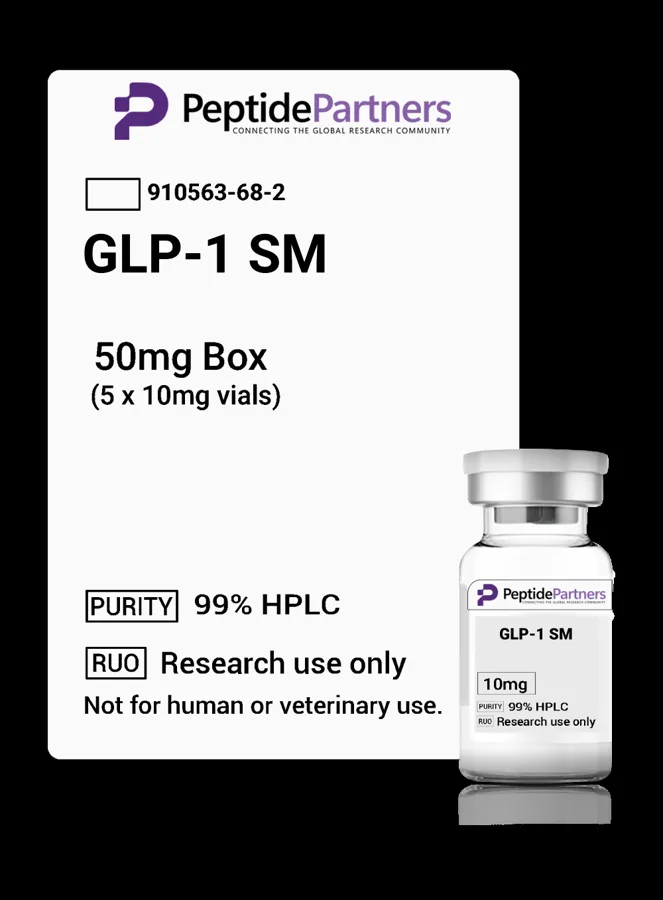
Available packs
GLP-1 Semaglutide
$285 - $976
Buy GLP-1 Semaglutide (10mg vials) from Peptides Partners
Laboratories and academic institutions seeking verified, high-grade reference materials can order GLP-1 Semaglutide (10mg vials) directly through Peptides Partners. As an established distributor of research peptides, our organization provides biochemical reagents tailored exclusively for in vitro experimentation, physiological modeling, and molecular assays. When qualified researchers prepare to buy GLP-1 SM for their active protocols, consistency, clear analytical documentation, and dependable shipping conditions represent paramount considerations.
Each unit supplied in this category contains 10 milligrams of lyophilized peptide cake, sealed in an industry-standard borosilicate glass vial under inert nitrogen atmospheric control. This formatting shields the delicate amino acid chain from premature oxidative degradation, moisture infiltration, and thermal flux during transit. Whether investigations focus on metabolic pathway regulation, peptide-receptor binding kinetics, or incretin mimetic stability profiling, Peptides Partners ensures that every batch corresponds to rigorous chemical synthesis specifications.
Our operational model centers around supporting preclinical discovery. We deliver bulk and multi-vial options that facilitate longitudinal study designs without introducing batch-to-batch variability. By stocking GLP-1 Semaglutide in accessible 10mg configurations, laboratories gain the flexibility to formulate targeted working concentrations while preserving surplus inventory in stable lyophilized states.
What is GLP-1 Semaglutide?
GLP-1 Semaglutide is a synthetic glucagon-like peptide-1 (GLP-1) receptor agonist classified under the chemical abstracts service identifier CAS 910463-68-2. It belongs to the broader category of metabolics and incretin-based peptide compounds. Structurally, Semaglutide acts as a modified analog of native human GLP-1(7-37), an endogenous peptide hormone secreted by intestinal L-cells in response to nutrient ingestion.
The native GLP-1 peptide possesses an exceptionally brief biological half-life in physiological models, frequently measured at under two minutes, due to rapid enzymatic cleavage mediated by dipeptidyl peptidase-4 (DPP-4) and neutral endopeptidase (NEP). To overcome this structural limitation for scientific inquiry, Semaglutide incorporates specific rational engineering modifications:
- Position 8 Substitution: The native alanine residue at position 8 is replaced by 2-aminoisobutyric acid (Aib). This non-proteinogenic amino acid provides steric hindrance that significantly impedes degradation catalyzed by the DPP-4 enzyme.
- Position 34 Substitution: The native lysine residue at position 34 is replaced by an arginine residue, ensuring site-specific acylation exclusively at the targeted lysine position.
- Position 26 Functionalization: Lysine at position 26 is covalently conjugated to a hydrophilic spacer—consisting of two 8-amino-3,6-dioxaoctanoic acid (ADO) units and a glutamic acid residue—which is connected to a C18 fatty diacid chain (octadecanedioic acid).
This prolonged C18 diacid side chain imparts high-affinity, reversible binding to circulating serum albumin. In fluid dynamic systems and biological tissue models, this albumin-binding capacity reduces renal clearance rates while creating an endogenous depot effect, thereby extending functional receptor interaction timeframes extensively compared to wild-type GLP-1.
The empirical chemical formula for Semaglutide is C187H291N45O59, with a calculated nominal molecular weight of approximately 4113.58 g/mol. Understanding these molecular adaptations is critical for researchers analyzing thermodynamic stability, cellular uptake kinetics, and receptor interaction mechanics across varied research mediums.
Research effects studied
In academic literature and preclinical investigation, GLP-1 Semaglutide has served as an essential tool for evaluating incretin biology and metabolic signaling networks. The compound has been studied in preclinical and clinical research across several primary physiological domains:
GLP-1 Receptor Activation and Second-Messenger Signaling
Preclinical cellular assays utilize Semaglutide to characterize downstream intracellular transduction cascades. Upon binding to the transmembrane GLP-1 receptor (a class B secretin-like G protein-coupled receptor), the ligand triggers conformational shifts that activate adenylate cyclase via Gαs coupling. Research protocols routinely monitor the subsequent elevation of intracellular cyclic adenosine monophosphate (cAMP), the activation of protein kinase A (PKA), and the downstream modulation of exchange protein directly activated by cAMP (EPAC2). These cascades are studied for their downstream influence on cellular gene expression, membrane polarization, and exocytotic machinery.
Pancreatic Islet Physiology and Beta-Cell Biology
In isolated rodent islet preparations and cell culture systems, researchers investigate how prolonged GLP-1 receptor agonism alters transcriptional pathways involved in proinsulin biosynthesis. Studies frequently measure the expression of transcription factors such as PDX-1 (pancreatic and duodenal homeobox 1) and MafA. Furthermore, investigators have evaluated the peptide’s capacity to modulate pathways associated with apoptosis, exploring whether sustained incretin signaling downregulates endoplasmic reticulum (ER) stress markers (such as CHOP and cleaved caspase-3) under conditions of glucolipotoxic stress.
Central Nervous System Signaling and Satiety Pathways
Neurobiological research has explored the transport across the blood-brain barrier and the direct activation of central GLP-1 receptors by Semaglutide. Preclinical rodent models have demonstrated uptake within circumventricular organs, specifically evaluating receptor populations localized in the arcuate nucleus (ARC), the area postrema, and the nucleus of the solitary tract (NTS). Investigators assess whether receptor activation modulates pro-opiomelanocortin (POMC) and cocaine- and amphetamine-regulated transcript (CART) neuronal firing while simultaneously repressing neuropeptide Y (NPY) and agouti-related peptide (AgRP) transcription, thereby altering central signaling cascades governing energy expenditure and satiety.
Cardiovascular and Vascular Biomarkers
In preclinical models evaluating vascular endothelium and myocardial tissue, Semaglutide has been utilized to evaluate non-glycemic signaling endpoints. Published investigations track endothelial nitric oxide synthase (eNOS) phosphorylation, vascular adhesion molecule expression (such as VCAM-1 and ICAM-1), and systemic inflammatory mediators, including high-sensitivity C-reactive protein and tumor necrosis factor-alpha (TNF-α). Researchers observe these parameters to characterize the interaction between metabolic receptor agonists and vascular smooth muscle dynamics.
Hepatic and Peripheral Lipid Metabolism
Cellular models of hepatic steatosis have employed Semaglutide to examine de novo lipogenesis pathways. Preclinical protocols analyze hepatic enzyme expression, including sterol regulatory element-binding protein 1c (SREBP-1c) and fatty acid synthase (FAS), providing insights into how incretin signaling interacts indirectly with hepatic fatty acid beta-oxidation and lipid storage mechanisms.
How to use in the laboratory
Handling and preparing GLP-1 Semaglutide requires strict adherence to analytical chemistry standards and aseptic laboratory technique. The following protocol outlines appropriate procedures for reconstitution, working stock preparation, and data logging. This compound is reserved strictly for laboratory research and must never be administered to humans or non-laboratory animals.
Laboratory Equipment and Environment
Perform all reconstitution and liquid handling steps inside a certified laminar flow hood or biosafety cabinet to prevent airborne microbial contamination. Researchers should wear appropriate personal protective equipment (PPE), including a laboratory coat, nitrile gloves, and chemical splash goggles.
Reconstitution Procedures
- Allow the lyophilized 10mg vial of Semaglutide to equilibrate to ambient room temperature (approximately 20°C to 22°C) for 20 to 30 minutes prior to reconstitution. Opening cold vials introduces atmospheric moisture, which can cause hygroscopic clumping and alter peptide stability.
- Disinfect the external surface of the vial’s rubber septum using a sterile 70% isopropyl alcohol swab and permit it to air-dry completely.
- Select an appropriate, research-grade diluent based on assay requirements. Common reconstitution solvents include bacteriostatic water (containing 0.9% benzyl alcohol), sterile water for injection, or sterile phosphate-buffered saline (PBS, pH 7.4).
- Using a sterile laboratory syringe fitted with an appropriate gauge needle (such as 21G to 25G), withdraw the measured volume of diluent. For example, introducing 2.0 mL of solvent into a 10mg vial establishes a nominal working concentration of 5.0 mg/mL (5.0 µg/µL).
- Insert the needle through the center of the septum and direct the flow of liquid slowly along the interior glass wall of the vial. Do not inject the liquid directly onto the lyophilized cake with high velocity, as rapid shear forces can disrupt peptide tertiary structures.
- Allow the vial to rest undisturbed for several minutes as the solvent saturates the cake. Gently rotate and invert the vial until the powder completely dissolves into a clear, colorless, particulate-free solution. Do not agitate or vortex vigorously, as aggressive mechanical agitation can cause foaming, surface denaturation, and peptide aggregation.
Aliquot Preparation and Record-Keeping
To prevent repeated temperature fluctuations, immediately divide the reconstituted solution into single-use microcentrifuge tubes or sterile polypropylene cryovials. Clearly label each container using chemical-resistant markers or cryo-labels indicating the compound name, batch/lot number, calculated concentration, reconstitution date, and solvent identity. Maintain precise logbooks documenting initial reconstitution volume, aliquot allocation, and the specific research assays in which the material is deployed.
Pack sizes and price per mg
Peptides Partners provides tiered packaging configurations for GLP-1 Semaglutide (10mg vials), enabling laboratories to scale their acquisitions according to project scope while reducing baseline expenditure. The following table reflects our standardized research packaging, total peptide contents, and associated price structures:
| Pack Configuration | Total Peptide Content | Total Price (USD) | Price per mg (USD) |
|---|---|---|---|
| 5 vials x 10mg | 50 mg | $285 | $5.70 |
| 10 vials x 10mg | 100 mg | $518 | $5.18 |
| 15 vials x 10mg | 150 mg | $754 | $5.03 |
| 20 vials x 10mg | 200 mg | $976 | $4.88 |
Acquiring larger pack volumes lowers the direct cost per milligram from $5.70 per mg down to $4.88 per mg, providing substantial efficiency for academic groups and continuous screening facilities requiring ongoing chemical supplies.
Storage and handling
Proper environmental control maintains peptide stability, preserves conformational integrity, and prevents hydrolytic or thermal breakdown. Storage protocols depend directly on whether the compound remains in its dry, lyophilized form or has been reconstituted into liquid solution.
Lyophilized Peptide Storage
- Long-Term Archive: Store untouched, lyophilized vials at -20°C (-4°F) or -80°C (-112°F) in a manual-defrost freezer. Auto-defrost cycles cause periodic temperature increases that can accelerate peptide degradation. Under deep-freeze conditions, intact vials maintain stability for up to 24 months.
- Short-Term Handling: Lyophilized vials may be maintained at refrigerated conditions (2°C to 8°C) for up to 90 days without measurable degradation, provided the containers remain protected from moisture and light exposure.
- Desiccation: Maintain vials within sealed containers featuring anhydrous silica gel packets to counter relative humidity.
Reconstituted Solution Storage
- Refrigerated Parameters: Once dissolved in a bacteriostatic medium, aqueous peptide solutions should be kept at 2°C to 8°C (36°F to 46°F). Solutions stored at this temperature should ideally be consumed within 21 to 28 days to minimize degradation or precipitation risk.
- Frozen Working Stocks: If reconstituted solutions must be stored long-term, freeze individual aliquots at -20°C or -80°C. Reconstituted peptide solutions should never be subjected to repeated freeze-thaw cycles; once thawed, an aliquot must be used or safely discarded according to facility hazardous waste protocols.
- Photoprotection: Store reconstituted vials in opaque secondary containers or amber boxes, as direct ultraviolet and fluorescent light can promote photolytic degradation across sensitive amino acid residues.
Quality and documentation
Peptides Partners treats analytical validation as an essential prerequisite for experimental reproducibility. Laboratories sourcing research peptides require transparent, verifiable documentation establishing both chemical identity and compound purity prior to commencing experimental protocols.
Every manufactured batch of GLP-1 Semaglutide is evaluated through standard analytical platforms:
- High-Performance Liquid Chromatography (HPLC): Analytical reverse-phase HPLC (RP-HPLC) profiles each lot, establishing chromatogram peaks that identify the target analyte while detecting minor synthesis-related deletion or truncated peptide impurities.
- Mass Spectrometry (MS / LC-MS): Electrospray ionization mass spectrometry (ESI-MS) or matrix-assisted laser desorption/ionization time-of-flight (MALDI-TOF) confirms that the observed molecular mass precisely matches the calculated theoretical mass of Semaglutide (4113.58 g/mol).
- Batch Traceability: Individual lots are linked to comprehensive Certificates of Analysis (CoA). These documents detail batch numbers, synthesis dates, spectroscopic data, and appearance benchmarks, ensuring complete provenance for academic publications and regulatory audits.
Our ongoing quality management framework ensures that investigators receive well-characterized materials that behave consistently across baseline control runs and complex experimental assays.
Frequently asked questions
What is the molecular weight and CAS number for GLP-1 Semaglutide?
GLP-1 Semaglutide possesses a nominal molecular weight of 4113.58 g/mol and is categorized under CAS 910463-68-2. Its empirical molecular formula is C187H291N45O59. These chemical properties reflect its modified peptide sequence, including the C18 fatty diacid side chain coupled to lysine-26 via an ADO-glutamate spacer.
Which laboratory solvents are compatible with Semaglutide reconstitution?
For research and in vitro experiments, sterile bacteriostatic water (containing 0.9% benzyl alcohol) is routinely employed if the reconstituted stock will be sampled over multiple days within a refrigerated environment. Sterile water for injection or sterile physiological buffers such as phosphate-buffered saline (PBS, pH 7.2 to 7.4) may also be selected for applications where bacteriostatic preservatives might interfere with enzymatic or cellular assays.
Why does Semaglutide exhibit extended stability in research models compared to native GLP-1?
Native GLP-1(7-37) is rapidly degraded by dipeptidyl peptidase-4 (DPP-4), which cleaves the peptide between alanine at position 8 and glutamic acid at position 9. In Semaglutide, alanine-8 is replaced by 2-aminoisobutyric acid (Aib), preventing DPP-4 cleavage. Additionally, the acylated C18 fatty diacid side chain at position 26 enables reversible binding to albumin, significantly decreasing clearance rates in fluid assays and pharmacokinetic studies.
Can GLP-1 Semaglutide purchased from Peptides Partners be utilized in clinical or diagnostic protocols?
No. All products available from Peptides Partners, including GLP-1 Semaglutide (10mg vials), are synthesized and labeled strictly for laboratory research, scientific evaluation, and analytical testing. They are not approved for human or animal consumption, diagnostic utility, therapeutic intervention, or clinical administration under any circumstances.
Related Peptides Partners research peptides
GLP-3 RT (12mg vials); Meta-Z Kit (10mL vials); SS-31 (10mg vials).
GLP-1 Semaglutide lot documentation
Certificates of analysis are matched to the actual lot supplied with your order. Email sales@peptidespartners.co with the product name and pack size to request the current lot's purity, identity and screening documents before purchase.
Storage
Research peptides are typically supplied lyophilized (freeze-dried), which keeps them stable for shipping and storage. Store unopened vials cool, dry and away from light; for long-term storage, a freezer is generally recommended.
After reconstitution, keep vials refrigerated and use sterile laboratory technique. Follow the handling guidance supplied with your lot documentation.
- Short name
- GLP-1 Semaglutide (10mg vials)
- Vial strength
- 10mg vials
- Pack sizes
- 50mg pack, 100mg pack, 150mg pack, 200mg pack
- Pack count options
- 5, 10, 15, 20 vial packs
- CAS number
- 910463-68-2
- Category
- Metabolics
- SKU
- PP-2434
- Compliance
- Research Use Only. Not for use in diagnostic tests.