
KPV
10mg per vial
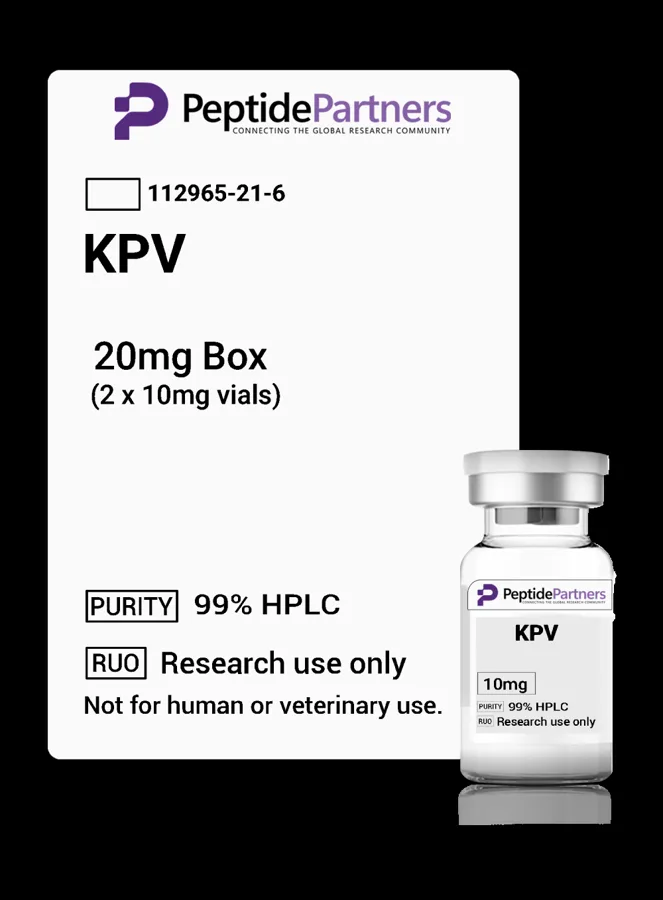
Available packs
KPV
$88 - $320
Buy KPV (10mg vials) from Peptides Partners
Peptides Partners provides reference-grade KPV (10mg vials) tailored specifically for biomedical, in vitro, and animal research protocols. Known systematically as Lys-Pro-Val, this tripeptide fragment has emerged as a major focus in molecular biology, particularly within the domain of cellular repair, epithelial barrier preservation, and inflammatory pathway modulation. When laboratories prepare to buy KPV for controlled experimental designs, sourcing high-integrity compounds with rigorous compositional fidelity is essential to achieving reproducible data.
At Peptides Partners, our catalog of research peptides is synthesized to meet the exacting criteria required by universities, private research institutes, and contract research organizations (CROs). Every batch of KPV undergoes stringent quality control verification to ensure accurate molecular weight, peptide content, and structural confirmation. Supplied in lyophilized format within protective glass vials, our KPV preparations offer maximal stability for extended laboratory shelf lives, providing scientists with reliable materials for diverse cellular and biochemical studies.
It is important to emphasize that all preparations of KPV available on this platform are strictly designated for laboratory research use only. These materials are not intended for human or animal clinical consumption, diagnostics, therapeutics, agricultural application, or household use. By facilitating access to pure, consistent biochemical reagents, Peptides Partners supports investigators working to elucidate the complex molecular cascades governing cellular repair and tissue homeostasis.
What is KPV?
KPV is a naturally occurring tripeptide consisting of the L-amino acid sequence Lysine-Proline-Valine (Lys-Pro-Val). Identified under Chemical Abstracts Service registry number CAS: 67727-97-3, KPV represents the C-terminal tripeptide residue (amino acids 11-13) of alpha-Melanocyte-Stimulating Hormone (α-MSH), a pivotal endogenous tridecapeptide derived from the proopiomelanocortin (POMC) precursor protein. The molecular formula of KPV is C16H31N5O4, with a nominal molecular weight of approximately 385.46 g/mol.
Unlike the full-length parent hormone α-MSH, which activates multiple melanocortin receptors (particularly MC1R) to drive melanogenesis and pigmentary changes alongside systemic immune-modulating effects, KPV demonstrates unique biochemical behaviors. Research indicates that KPV retains potent biological activities associated with cellular repair and inflammatory modulation while operating largely independent of the classical pigment-inducing properties linked to the central melanocortin receptor pharmacophore. In many experimental models, KPV exerts its downstream actions through receptor-independent pathways or via interactions with alternative cellular targets, including peptide transporters such as PepT1 (SLC15A1).
The structural simplicity of KPV grants it favorable thermodynamic stability and chemical resilience relative to larger, more conformationally complex polypeptides. The presence of the rigid proline residue between basic lysine and hydrophobic valine imparts conformational constraints that reduce susceptibility to rapid enzymatic cleavage by non-specific aminopeptidases. This relative enzymatic stability makes KPV an attractive candidate for studying localized cellular recovery, trans-epithelial transport, and receptor-independent signal transduction in strictly controlled academic settings.
Research effects studied
In published scientific literature, KPV has been studied across diverse preclinical models to investigate its multi-targeted cellular mechanisms. A substantial portion of KPV literature focuses on its capacity to influence cellular repair cascades, stabilize mucosal membranes, reduce oxidative stress, and attenuate inflammatory signaling networks. Below are the primary domains where KPV has garnered scientific investigation:
- Nuclear Factor-Kappa B (NF-κB) Pathway Modulation: Preclinical investigations have repeatedly explored the interaction between KPV and the classical NF-κB signaling pathway. In stimulated cell cultures, researchers have documented that KPV can enter the cytoplasm—partially facilitated by the oligopeptide transporter PepT1—and migrate toward the nuclear compartment. In vitro assays suggest that KPV can inhibit the nuclear translocation of active NF-κB p65 subunits, thereby downregulating the transcriptional activation of pro-inflammatory cytokines such as tumor necrosis factor-alpha (TNF-α), interleukin-1 beta (IL-1β), and interleukin-6 (IL-6).
- Epithelial and Mucosal Cellular Repair: In models of intestinal inflammation, such as dextran sulfate sodium (DSS)-induced colitis in rodents, KPV has been examined for its role in maintaining epithelial integrity. Preclinical data indicate that exposure to KPV correlates with accelerated restoration of the mucosal barrier, preservation of tight junction proteins (such as occludin and zonula occludens-1), and attenuation of leukocyte infiltration into the lamina propria. These findings place KPV at the forefront of cellular repair research concerning gastrointestinal pathophysiology.
- Dermal Fibroblast Dynamics and Wound Remodeling: Cutaneous research models have evaluated KPV in the context of tissue regeneration, collagen organization, and scar reduction. Investigations using cultured dermal fibroblasts and keratinocytes show that KPV can modulate the balance between extracellular matrix (ECM) synthesis and degradation, often through balanced matrix metalloproteinase (MMP) expression. Scientists study these properties to explore how the tripeptide influences cellular migration and limits hyper-inflammatory fibrotic transitions during experimental wound healing protocols.
- Direct and Indirect Antimicrobial Activity: Independent of its host-modulating properties, KPV has been evaluated for direct antimicrobial effects against specific pathogens, including Staphylococcus aureus and Candida albicans. Structural biology research suggests that the cationic nature of the lysine residue enables electrostatic interactions with microbial cell membranes, potentially disrupting membrane permeability or interfering with colony germination, presenting an intriguing avenue for multi-functional peptide research.
- Joint and Cartilage Homeostasis: Additional academic inquiries have investigated KPV within synovial tissue and chondrocyte cultures. Preclinical arthritis models suggest that the peptide downregulates catabolic signaling cascades that otherwise drive cartilage degradation, providing a baseline model for evaluating structural tissue preservation in chronic inflammatory microenvironments.
How to use in the laboratory
To preserve structural integrity and achieve accurate experimental outcomes, laboratory personnel must follow established biochemical practices when handling, reconstituting, and measuring KPV. Because small tripeptides can adsorb to non-treated glassware or plastics if prepared improperly, standard operating procedures must be maintained throughout all phases of preparation.
- Aseptic Reconstitution Technique: Reconstitution should always take place inside a calibrated laminar flow hood or biosafety cabinet to prevent biological or environmental contamination. Reagents, pipette tips, and collection vessels must be certified sterile, endotoxin-free, and chemical-grade.
- Choice of Solvent: Lyophilized KPV exhibits high solubility in aqueous solutions. Depending on the downstream assay, researchers commonly reconstitute KPV in sterile bacteriostatic water, sterile deionized water, or sterile phosphate-buffered saline (PBS, pH 7.2 to 7.4). For cell culture applications, isotonic buffer systems that avoid toxic preservatives are generally preferred.
- Dissolution Dynamics: Slowly introduce the liquid diluent along the internal glass wall of the vial rather than applying direct, high-pressure force directly onto the lyophilized pellet. Allow the solvent to passively wet the cake. Gently swirl or roll the vial between gloved hands until the compound completely dissolves into a clear, colorless solution. Avoid aggressive agitation or high-speed vortexing, as vigorous shear forces can induce mechanical degradation or denaturation of peptide fragments.
- Aliquot Strategy: Once dissolved, the working stock should be portioned into single-use, low-binding polypropylene microcentrifuge tubes. Pre-aliquoting minimizes exposure to repetitive freeze-thaw cycles, which are known to precipitate peptide degradation and cause concentration variability over time.
- Rigorous Record-Keeping: Every reconstituted vial must be labeled with the precise concentration, solvent type, reconstitution date, lot number, and the preparer’s identifier. Laboratory notebooks should log total mass, final calculated volume, and storage location coordinates within the facility’s cryogenic inventory.
Pack sizes and price per mg
Peptides Partners offers KPV (10mg vials) in multiple package configurations to support both small-scale pilot studies and extensive multi-stage experimental trials. Sourcing larger pack sizes lowers the unit cost per milligram, enabling laboratories to maximize funding efficiency without sacrificing reagent consistency.
| Package Configuration | Total Compound (mg) | Total Price (USD) | Price per mg (USD) |
|---|---|---|---|
| 2 vials x 10mg | 20 mg | $88 | $4.40 / mg |
| 5 vials x 10mg | 50 mg | $190 | $3.80 / mg |
| 10 vials x 10mg | 100 mg | $320 | $3.20 / mg |
When selecting your experimental supply, purchasing the 10-vial tier yields a 27.2% reduction in price per milligram relative to the entry-level 2-vial package. This tiered pricing allows academic and corporate laboratories to optimize resources across long-term cellular repair projects.
Storage and handling
Correct environmental control is vital to ensure that KPV maintains its chemical potency, purity profile, and peptide integrity over extended storage periods. Lyophilized peptides are inherently stable under sub-ambient conditions, but improper exposure to temperature variations, light, and ambient moisture will compromise quality.
- Lyophilized Compound Storage: Store unopened lyophilized KPV vials at -20°C for standard short-to-medium duration storage (up to 12 months) or at -80°C for long-term biobanking (up to 24 months). Store the vials in a dry, dark environment protected from radiant heat and ultraviolet light exposure.
- Handling Temperature Shifts: Prior to unsealing a frozen vial, allow the container to equilibrate to ambient laboratory temperature (approximately 20°C to 25°C) for 20 to 30 minutes inside a desiccator. Opening a chilled vial in open laboratory air introduces humidity, which causes atmospheric moisture to condense onto the lyophilized powder, leading to premature hydrolytic degradation.
- Reconstituted Solution Stability: Once dissolved, aqueous solutions of KPV should be kept refrigerated at 2°C to 8°C if they are to be consumed within 24 to 72 hours. For extended storage, aliquoted working solutions should be stored immediately at -20°C or -80°C. Under these conditions, aliquots generally remain viable for 1 to 3 months, provided freeze-thaw cycles are entirely avoided.
- Chemical Incompatibilities: Keep KPV solutions away from strong oxidizing agents, excessive acid or alkali buffers (maintaining an optimal pH range of 6.0 to 7.8), and heavy metal ions, all of which may catalyze hydrolysis of the peptide bonds or alter the net charge of the lysine residue.
Quality and documentation
Reliable biological and biomedical research depends on the absolute chemical transparency of the reagents employed. Peptides Partners implements rigorous analytical standards across all cataloged research peptides to ensure consistent performance from lot to lot.
Each production run of KPV (CAS: 67727-97-3) is characterized using High-Performance Liquid Chromatography (HPLC) to verify chromatographic purity, confirming that residual synthesis intermediates and truncated deletion sequences are strictly suppressed. In parallel, Liquid Chromatography-Mass Spectrometry (LC-MS) is utilized to verify the exact monoisotopic molecular weight (385.46 g/mol) and amino acid sequence configuration.
Every order dispatched by Peptides Partners is accompanied by a batch-specific Certificate of Analysis (CoA) containing complete chromatographic traces, physical appearance metrics, net peptide content determinations, and verified lot tracking numbers. This documentation allows research teams to satisfy internal audit mandates and external compliance guidelines, ensuring total confidence when you buy KPV for academic or corporate exploratory science.
Frequently asked questions
What distinguishes KPV from full-sequence alpha-MSH in research models?
While KPV is structurally derived from the C-terminal segment of alpha-Melanocyte-Stimulating Hormone (α-MSH amino acids 11-13), it lacks the core sequence His-Phe-Arg-Trp responsible for classic melanocortin receptor (MC1R) binding and pigmentary stimulation. In laboratory settings, this distinction allows investigators to isolate the cellular repair, anti-inflammatory, and antimicrobial properties of the melanocortin system without eliciting the melanogenic side effects commonly triggered by the complete 13-amino-acid peptide.
How should KPV be reconstituted for cellular repair and cell culture assays?
For in vitro cell culture studies, KPV is typically reconstituted in sterile, endotoxin-free phosphate-buffered saline (PBS) or sterile cell culture-grade water to establish a concentrated stock solution (e.g., 1 mg/mL to 10 mg/mL). Researchers should perform this process in a sterile environment, utilizing low-protein-binding consumables. The stock solution is then diluted directly into experimental culture media at target micromolar or nanomolar concentrations immediately prior to testing.
What cellular pathways are predominantly investigated with KPV?
The majority of peer-reviewed research investigates KPV’s regulatory interactions with the NF-κB transcriptional complex, MAP kinase signaling cascades, and the dynamic expression of tight junction proteins in mucosal surfaces. Furthermore, researchers evaluate its cellular uptake via peptide transporter systems (such as PepT1/SLC15A1) and assess downstream alterations in cytokine release profiles, extracellular matrix remodeling enzymes (MMPs), and fibrotic markers in fibroblasts and epithelial cells.
Is KPV suitable for in vivo diagnostic or therapeutic use?
No. KPV supplied by Peptides Partners is synthesized exclusively for laboratory research use and in vitro or controlled experimental animal studies. It is not approved by regulatory authorities for human use, nor is it formulated, manufactured, or packaged for direct administration, clinical evaluation, diagnostic procedures, or therapeutic intervention in humans or companion animals.
Related Peptides Partners research peptides
Meta-Z Kit (10mL vials); PP Water (10mL vials); Z's Total B Kit (10mL vials).
KPV lot documentation
Certificates of analysis are matched to the actual lot supplied with your order. Email sales@peptidespartners.co with the product name and pack size to request the current lot's purity, identity and screening documents before purchase.
Storage
Research peptides are typically supplied lyophilized (freeze-dried), which keeps them stable for shipping and storage. Store unopened vials cool, dry and away from light; for long-term storage, a freezer is generally recommended.
After reconstitution, keep vials refrigerated and use sterile laboratory technique. Follow the handling guidance supplied with your lot documentation.
- Short name
- KPV (10mg vials)
- Vial strength
- 10mg vials
- Pack sizes
- 20mg pack, 50mg pack, 100mg pack
- Pack count options
- 2, 5, 10 vial packs
- CAS number
- 67727-97-3
- Category
- Cellular repair
- SKU
- PP-7412
- Compliance
- Research Use Only. Not for use in diagnostic tests.