
Ipamorelin
10mg per vial
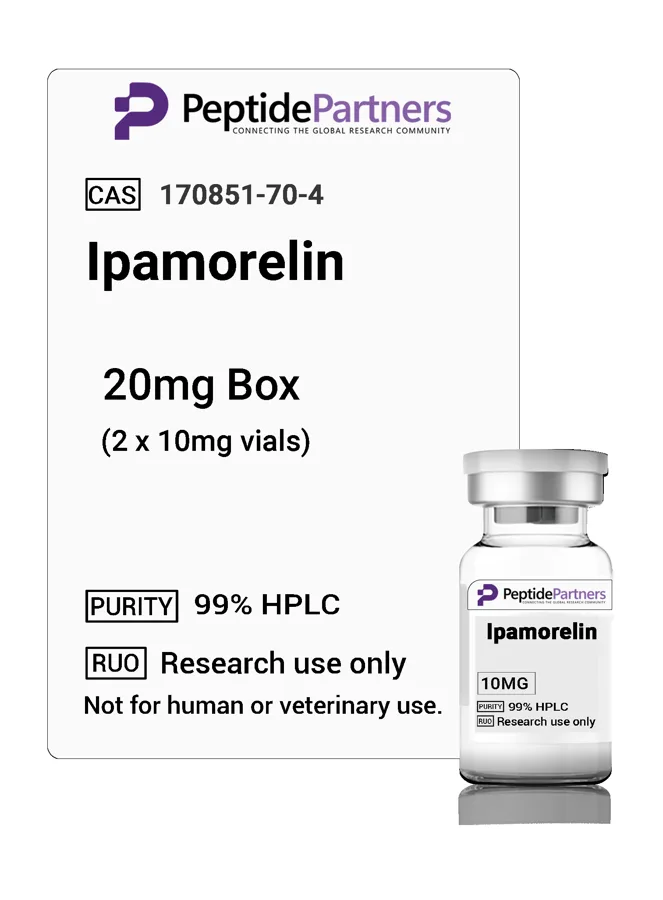
Available packs
Ipamorelin
$82 - $577
Buy Ipamorelin (10mg vials) from Peptides Partners
Laboratories and institutional investigators seeking high-integrity metabolic reagents can buy Ipamorelin in 10mg vials directly from Peptides Partners. Classified within the broader catalog of metabolic research peptides, Ipamorelin is supplied in a lyophilized format engineered specifically for analytical, in vitro, and animal research models. Each batch undergoes rigorous manufacturing controls to ensure chemical consistency, structural authenticity, and high solubility, providing investigators with reproducible baseline characteristics across repeated trials.
When you buy Ipamorelin through Peptides Partners, your facility receives laboratory-grade peptides secured in hermetically sealed glass vials that preserve sample stability during shipping and handling. The metabolic research sector demands exact standards; slight deviations in synthesis can skew binding assays, intracellular signaling readouts, or physiological profiling. Peptides Partners prioritizes chemical transparency, batch integrity, and strict adherence to synthesis standards, ensuring that our research peptides meet the operational demands of molecular biology, endocrinology, and pharmacology laboratories.
What is Ipamorelin?
Ipamorelin is a synthetic pentapeptide recognized under Chemical Abstracts Service registry number CAS 170851-70-4. Its primary sequence is composed of five amino acids: Aib-His-D-2-Nal-D-Phe-Lys-NH2, where Aib represents 2-aminoisobutyric acid (alpha-methylalanine) and D-2-Nal represents D-2-naphthylalanine. Structurally, it possesses the molecular formula C38H49N9O5 with a calculated molecular weight of approximately 711.86 g/mol. It is categorized within the growth hormone secretagogue receptor (GHS-R1a) agonist family.
Originally developed during investigations into growth hormone secretagogues (GHSs), Ipamorelin was synthesized to overcome the off-target receptor activation observed in first- and second-generation compounds such as GHRP-6 and GHRP-2. Traditional peptide secretagogues frequently stimulate collateral neuroendocrine pathways, driving the transcription and release of adrenocorticotropic hormone (ACTH), cortisol, and prolactin. In structural-activity relationship (SAR) assays, Ipamorelin demonstrated a distinct receptor binding dynamic: it binds to the GHS-R1a receptor on pituitary somatotrophs with nanomolar affinity while displaying negligible binding affinity toward receptors governing secondary hypothalamic-pituitary-adrenal (HPA) axis hormones.
Because of this high selectivity, Ipamorelin is frequently classified in scientific literature as a third-generation GH secretagogue. It does not induce significant surges in hunger-associated signaling via broader neuropeptide Y release mechanisms in the same pattern as non-selective analogs, making it a critical control and exploratory molecule in neuroendocrinology and metabolic pathway research.
Research effects studied
Ipamorelin has been extensively evaluated in preclinical and early-phase clinical research across various biological models. Scientific publications highlight its distinct pharmacodynamic profile across several primary research disciplines:
- Endocrine Axis and Pituitary Signaling: In vitro investigations utilizing primary rat pituitary cell cultures have studied Ipamorelin’s ability to selectively stimulate somatotroph depolarization. Published data demonstrate that Ipamorelin prompts growth hormone (GH) secretion via intracellular calcium mobilization mediated by the inositol trisphosphate (IP3) signaling pathway. Crucially, studies measuring culture supernatant show that even at supra-physiological concentrations, Ipamorelin does not evoke the release of luteinizing hormone (LH), follicle-stimulating hormone (FSH), thyroid-stimulating hormone (TSH), prolactin, or ACTH.
- Bone Density and Osteoblast Dynamics: Preclinical models evaluating bone turnover have utilized Ipamorelin to investigate bone mineral density (BMD) changes. In animal models of osteopenia, longitudinal administration of Ipamorelin was studied to determine its impact on cortical and trabecular bone formation. Published findings indicate marked increases in markers of bone formation, such as alkaline phosphatase activity and osteocalcin, alongside enhanced mechanical strength in long bones, attributed to indirect endocrine actions mediated by systemic GH-induced IGF-1 elevation.
- Metabolic Profiling and Body Composition: In metabolic investigations, animal subjects exposed to Ipamorelin have been monitored for nitrogen retention, adiposity shifts, and lean mass preservation. Preclinical research in catabolic models—such as glucocorticoid-induced muscle wasting—indicates that selective GHS-R1a stimulation assists in attenuating nitrogen wasting and promoting structural protein preservation without precipitating glycemic instability.
- Gastrointestinal Motility: An area of substantial translational research has focused on postoperative ileus (POI). Because ghrelin receptors are distributed throughout the myenteric and submucosal plexuses of the gastrointestinal tract, Ipamorelin has been evaluated in rodent models of surgically induced bowel dysmotility. Researchers observed that Ipamorelin accelerated gastric emptying and shortened the transit time of the gastrointestinal tract, demonstrating prokinetic properties independent of central neuroendocrine cascades.
How to use in the laboratory
Working with Ipamorelin in an experimental setting requires consistent handling protocols to ensure molecular stability and experimental repeatability. The following parameters outline standard laboratory practices for reconstitution, aliquot preparation, and sample maintenance for research peptides.
Reconstitution Protocol:
- Allow the lyophilized vial to equilibrate to ambient room temperature (approximately 20°C to 25°C) before reconstitution. Opening a cold vial exposes the lyophilized cake to atmospheric condensation, which can degrade the peptide matrix.
- Using a sterile laboratory syringe, introduce an appropriate laboratory solvent—typically Bacteriostatic Water (0.9% benzyl alcohol) for multi-use analytical workflows or sterile 0.9% Sodium Chloride injection/analytical grade water for immediate cellular assays where preservatives could alter cell viability.
- Aim the stream of solvent against the inner glass wall of the vial rather than directly onto the lyophilized cake to minimize shear stress.
- Gently swirl the vial with a slow circular motion until the cake is fully dissolved into a clear, colorless solution. Do not vortex or vigorously agitate the vial, as peptide bonds and tertiary structures can undergo mechanical degradation or aggregation when exposed to excessive shear forces.
Record-Keeping and Bench Protocol:
- Maintain a dedicated log documenting the reconstitution date, solvent type, volume introduced, resulting concentration (mg/mL), lot number, and technician identity.
- Prepare single-use or limited-use aliquots using sterile, low-binding polypropylene microcentrifuge tubes. Dividing the reconstituted stock into defined working volumes prevents degradation caused by repeated freeze-thaw cycles.
- Affix chemical-resistant labels to all working aliquots detailing the exact concentration, date of reconstitution, and designated study identifier.
Pack sizes and price per mg
To support academic research laboratories, contract research organizations (CROs), and independent facilities scaling their study sizes, Peptides Partners supplies Ipamorelin 10mg vials across multiple multi-vial configurations. Purchasing higher unit volumes lowers the direct cost per milligram of active peptide reagent.
| Pack Configuration | Total Compound (mg) | Price (USD) | Effective Price per mg |
|---|---|---|---|
| 2 vials x 10mg | 20 mg | $82 | $4.10 / mg |
| 5 vials x 10mg | 50 mg | $187 | $3.74 / mg |
| 10 vials x 10mg | 100 mg | $326 | $3.26 / mg |
| 20 vials x 10mg | 200 mg | $577 | $2.89 / mg |
All configurations feature identical 10mg fill parameters per vial, enabling researchers to standardize baseline concentrations and minimize solvent-volume calculations across varied trial phases.
Storage and handling
Proper environmental control is critical to extending the shelf life and preserving the structural stability of Ipamorelin. Research facilities should observe the following environmental parameters:
- Lyophilized Compound Storage: The dry peptide cake should be stored in a laboratory freezer at -20°C for standard research timelines. For extended multi-year archival storage, a -80°C ultra-low freezer environment is recommended. Lyophilized vials may be stored at refrigerated temperatures (2°C to 8°C) for short durations during transit or immediate pre-experimental staging, provided they are kept away from direct light and moisture.
- Reconstituted Solution Storage: Once dissolved, the liquid peptide solution is significantly more susceptible to hydrolytic cleavage and microbial contamination. Reconstituted Ipamorelin must be maintained at 2°C to 8°C and utilized within defined experimental windows (typically 21 to 28 days when preserved with bacteriostatic agents). For prolonged intervals, liquid aliquots should be frozen at -20°C or -80°C.
- Freeze-Thaw Minimization: Reconstituted aliquots must not undergo multiple freeze-thaw sequences. Ice crystal formation during repeated cycling compromises the structural integrity of the peptide backbone, resulting in accelerated breakdown and diminished experimental potency.
- Light and Contamination Controls: Store vials in light-blocking boxes or amber secondary containers to prevent photolytic degradation. All manipulations should occur within a laminar flow hood or biosafety cabinet to prevent atmospheric biological contamination.
Quality and documentation
Peptides Partners ensures that our catalog reagents meet the rigorous expectations of scientific inquiry. Each synthesis run of Ipamorelin is monitored via standard analytical methodologies, confirming both identity and chemical purity prior to vial filling and lyophilization.
Analytical evaluation utilizes High-Performance Liquid Chromatography (HPLC) to verify chromatographic purity and identify any potential peptide fragments or residual synthesis impurities. Mass Spectrometry (MS) analysis is performed concurrently to validate the exact theoretical molecular mass (711.86 g/mol), confirming correct amino acid sequencing and the presence of the terminal amide modification. Batch-specific analytical documentation is archived to provide researchers with reliable confirmation of product parameters, facilitating reproducibility across all scientific studies.
Frequently asked questions
What is the molecular mechanism of action of Ipamorelin in cell culture models?
In vitro, Ipamorelin acts as a selective agonist of the growth hormone secretagogue receptor 1a (GHS-R1a), a G-protein-coupled receptor (GPCR). Upon binding, it stimulates the G-alpha-q/11 signaling pathway, activating phospholipase C (PLC). This triggers the cleavage of phosphatidylinositol 4,5-bisphosphate into diacylglycerol (DAG) and inositol trisphosphate (IP3), prompting the release of stored calcium ions from the endoplasmic reticulum and opening voltage-gated L-type calcium channels. The resulting intracellular calcium influx stimulates the exocytosis of growth hormone secretory vesicles from pituitary somatotrophs.
How does Ipamorelin differ from other growth hormone secretagogues in laboratory research?
Ipamorelin is distinguished by its high receptor selectivity. Earlier generation secretagogues like GHRP-6 and GHRP-2, while potent, trigger broader neuroendocrine cascades that cause concurrent increases in plasma ACTH, cortisol, and prolactin levels. In contrast, comparative studies show that Ipamorelin selectively targets somatotroph GH release without activating cortisol- or prolactin-stimulating pathways, establishing it as an ideal agent for isolating GH-specific metabolic pathways without secondary endocrine confounders.
What solvent is typically recommended for reconstituting lyophilized Ipamorelin vials in a research setting?
The choice of solvent depends on the research application. For analytical chemistry (e.g., HPLC standards) or long-term multi-puncture vials, sterile Bacteriostatic Water containing 0.9% benzyl alcohol is commonly utilized to prevent microbial growth. For in vitro cellular assays or tissue culture studies where antimicrobial preservatives can induce cellular toxicity, sterile 0.9% Sodium Chloride (saline) or analytical-grade sterile deionized water is preferred, with the reconstituted solution utilized immediately or portioned into single-use frozen aliquots.
Is Ipamorelin intended for clinical or veterinary diagnostic and therapeutic applications?
No. Ipamorelin supplied by Peptides Partners is strictly designated as a research-use-only chemical. It is not approved by regulatory authorities for diagnostic, clinical, medical, or veterinary applications. It must not be introduced to humans or animals outside of authorized, compliant experimental protocols within an appropriately equipped laboratory setting.
Related Peptides Partners research peptides
Kisspeptin (10mg vials); NAD+ Buffered (900mg vials); Thymosin Alpha-1 (TA1, 10mg vials).
Ipamorelin lot documentation
Certificates of analysis are matched to the actual lot supplied with your order. Email sales@peptidespartners.co with the product name and pack size to request the current lot's purity, identity and screening documents before purchase.
Storage
Research peptides are typically supplied lyophilized (freeze-dried), which keeps them stable for shipping and storage. Store unopened vials cool, dry and away from light; for long-term storage, a freezer is generally recommended.
After reconstitution, keep vials refrigerated and use sterile laboratory technique. Follow the handling guidance supplied with your lot documentation.
- Short name
- Ipamorelin (10mg vials)
- Vial strength
- 10mg vials
- Pack sizes
- 20mg pack, 50mg pack, 100mg pack, 200mg pack
- Pack count options
- 2, 5, 10, 20 vial packs
- CAS number
- 170851-70-4
- Category
- Metabolics
- SKU
- PP-995
- Compliance
- Research Use Only. Not for use in diagnostic tests.