
B12
10mL per vial
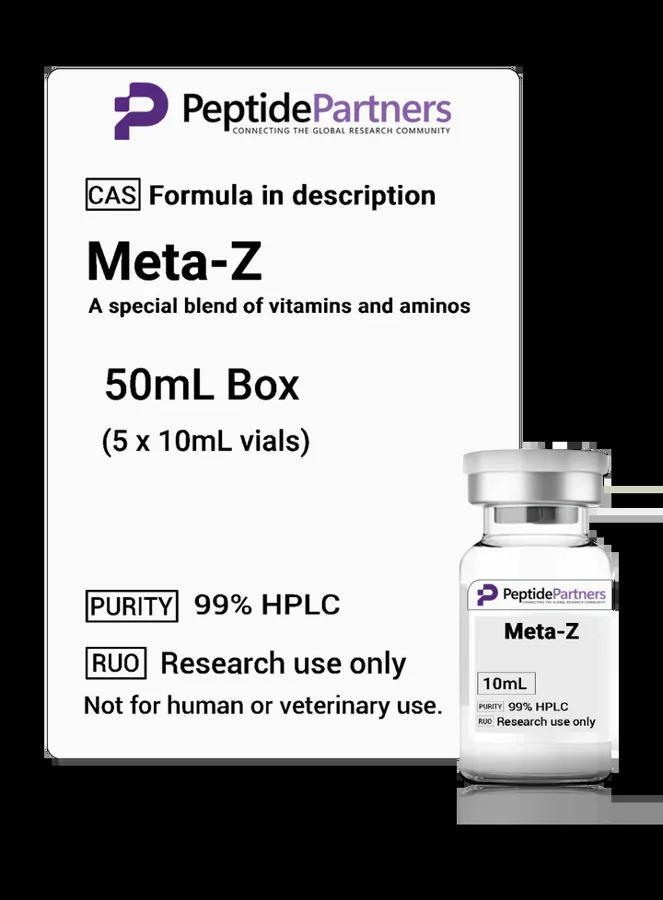
Available packs
B12
$300
Buy B12 (Methylcobalamin) 10mL vials from Peptides Partners
Methylcobalamin, designated under CAS number 13422-55-4, is an active coenzyme form of vitamin B12 utilized extensively across cellular biology, molecular biochemistry, and physiological research. Peptides Partners supplies premium B12 (Methylcobalamin) in multi-dose 10mL vials specifically configured for laboratory experimentation and in vitro analyses. Designed to fulfill the stringent criteria demanded by contemporary research institutions, this product offers high analytical stability, verified physicochemical identity, and dependable batch-to-batch uniformity.
As academic and private laboratories investigate complex metabolic cascades, methylcobalamin continues to serve as an indispensable reagent within the lipotropic and coenzyme categories. Whether your team is exploring cellular methylation kinetics, lipid processing pathways, or neuroprotective cellular models, sourcing your compounds through Peptides Partners ensures that your assays are supported by rigorously handled reagents. Investigators working across broader metabolic and physiological paradigms often explore our catalog to buy Meta-Z Kit or evaluate complementary research peptides, cofactors, and lipotropic media designed to integrate seamlessly into multi-compound experimental designs.
All laboratory supplies distributed by Peptides Partners, including our B12 (Methylcobalamin) 10mL vials, are manufactured, packaged, and distributed strictly for laboratory research use only (RUO). This formulation is neither designed nor intended for human consumption, direct therapeutic application, clinical intervention, or veterinary diagnostic use. Laboratory professionals benefit from dependable access to thoroughly documented reagents engineered to maintain molecular fidelity across diverse assay configurations.
What is B12?
Vitamin B12 is a generic term encompassing a family of cobalt-containing corrinoid compounds collectively referred to as cobalamins. Among the diverse vitamer structures—which include cyanocobalamin, hydroxocobalamin, and adenosylcobalamin—methylcobalamin represents one of the two biologically active coenzyme configurations naturally participating in enzymatic reactions. Identified chemically as carbanide;cobalt(3+);[(2R,3S,4R,5S)-5-(5,6-dimethylbenzimidazol-1-yl)-4-hydroxy-2-(hydroxymethyl)oxolan-3-yl] [2-[[(2R)-1-[3-[(2R,3R,4S,5R)-5-(6-aminopurin-9-yl)-3,4-dihydroxyoxolan-2-yl]methoxy-hydroxyphosphoryl]oxypropan-2-yl]amino]-2-oxoethyl]hexanamide, methylcobalamin possesses an organometallic bond linking a central trivalent cobalt ion directly to a methyl ligand.
Within the structural landscape of cobalamins, the coordination complex is defined by a tetrapyrrole-derived corrin ring that chelates the central cobalt atom. The lower axial ligand is coordinated to a 5,6-dimethylbenzimidazole nucleotide base, whereas the upper axial position is occupied by the reactive methyl functional group. This organometallic carbon-cobalt (C-Co) bond exhibits unique cleavage dynamics that allow methylcobalamin to act as an essential methyl group donor in primary biochemical cycles.
In standard metabolic pathways, methylcobalamin operates as an obligatory cofactor for the cytosolic enzyme 5-methyltetrahydrofolate-homocysteine methyltransferase, commonly designated as methionine synthase (MS). In this catalytic pathway, methylcobalamin facilitates the transfer of a methyl group from 5-methyltetrahydrofolate to homocysteine, generating tetrahydrofolate and methionine. Methionine subsequently serves as the direct precursor to S-adenosylmethionine (SAMe), the universal methyl donor involved in nucleic acid methylation, protein processing, neurotransmitter synthesis, and phospholipid assembly.
Categorized under lipotropic reagents, methylcobalamin participates fundamentally in cellular systems that regulate lipid turnover and hepatic molecular transport. Lipotropics are biochemical agents that catalyze or support the mobilization and breakdown of lipids, preventing aberrant lipid accumulation in physiological research models. By driving the methionine-SAMe cascade, methylcobalamin supports the endogenous synthesis of phosphatidylcholine, an essential lipid component required for the assembly and secretion of very-low-density lipoproteins (VLDL). Consequently, researchers routinely examine methylcobalamin alongside choline, inositol, and methionine to investigate lipid handling, lipolysis, and cellular export mechanisms.
Research effects studied
Methylcobalamin has been the subject of extensive scientific investigation in preclinical, in vitro, and translational research frameworks. Investigators focus on several distinct biological domains where this organometallic cofactor influences cellular physiology:
- Homocysteine Remethylation and Folate Trap Modulation: Preclinical models frequently study methylcobalamin to dissect the folate-dependent remethylation cascade. Research has examined how coenzyme availability modulates methionine synthase activity, resolving intracellular accumulation of homocysteine and preventing the biological phenomenon known as the “methyl-folate trap.” In cell culture models, maintaining adequate methylcobalamin concentrations ensures sustained generation of tetrahydrofolate, supporting downstream purine and thymidylate biosynthesis.
- Lipotropic and Hepatic Lipid Processing: Within metabolic research, methylcobalamin has been studied for its role in supporting transmethylation pathways that direct lipid partition. In preclinical models of lipid dysregulation, researchers explore how the synthesis of phosphatidylcholine via the phosphatidylethanolamine N-methyltransferase (PEMT) pathway—reliant on SAMe generated via methylcobalamin-dependent remethylation—influences triglyceride clearance and hepatic steatosis dynamics.
- Neurobiology and Axonal Regeneration Models: Preclinical neurobiology studies frequently employ methylcobalamin to investigate neuronal survival, Schwann cell viability, and nerve regeneration. Literature indicates that methylcobalamin stimulates protein synthesis in neuronal tissue models and promotes the transcription of genes involved in axonal sprouting and myelination. In vitro nerve injury assays have demonstrated enhanced extracellular signal-regulated kinase (ERK1/2) and Akt pathway signaling in response to methylcobalamin exposure.
- Mitochondrial Dynamics and Oxidative Stress: In cellular assays exposed to toxic or oxidative challenges, methylcobalamin has been evaluated for its potential to modulate cellular glutathione pools. By maintaining the flow of homocysteine into the transsulfuration pathway when remethylation is balanced, cells preserve cysteine availability for glutathione synthesis. Researchers have documented changes in reactive oxygen species (ROS) formation, lipid peroxidation, and mitochondrial membrane potential in methylcobalamin-treated experimental cell lines.
- Epigenetic Regulation and DNA Methylation: Because methylcobalamin directly influences SAMe production, molecular geneticists utilize this compound to analyze global and gene-specific DNA methylation patterns. Research demonstrates that alterations in cobalamin availability can shift the SAMe-to-S-adenosylhomocysteine (SAH) ratio, modifying the activity of DNA methyltransferases (DNMTs) and histone methyltransferases in cultured embryonic and somatic cells.
How to use in the laboratory
B12 (Methylcobalamin) 10mL vials are formulated for in vitro research, analytical standard preparation, and controlled laboratory bench procedures. Adherence to standard biosafety and chemical handling protocols is necessary to protect compound stability and achieve reproducible experimental outcomes. Under no circumstances should this material be applied to humans or animals.
Standard laboratory workflows for B12 (Methylcobalamin) involve the following procedural guidelines:
- Aseptic Handling and Environment: All container access and sample manipulation must occur within a certified Class II biological safety cabinet or laminar flow hood. Operating in a sterile environment prevents microbial contamination of the multi-use 10mL vial, which could compromise prolonged cell culture experiments or enzymatic assays.
- Volumetric Extraction and Pipetting: The vial septum should be sanitized using a sterile 70% isopropanol wipe and allowed to air dry completely prior to needle or cannula insertion. For analytical procedures, use calibrated micropipettes equipped with sterile, aerosol-barrier filter tips to withdraw precise microliter or milliliter aliquots.
- Solvent Compatibility and Dilution: While the liquid solution is provided ready for initial sampling, down-stream assay preparation frequently requires dilution into specific media. Methylcobalamin exhibits broad compatibility with sterile physiological saline, standard phosphate-buffered saline (PBS, pH 7.2–7.4), and balanced cell culture media (e.g., DMEM, RPMI 1640). Extreme pH environments (<4.0 or >9.0) should be avoided, as acidic or highly alkaline conditions accelerate degradation of the cobalt-carbon bond.
- Spectrophotometric and Chromatographic Assay Preparation: For high-performance liquid chromatography (HPLC) or UV-Vis spectrophotometry, methylcobalamin exhibits characteristic absorbance peaks near 266 nm, 342 nm, and 522 nm. Samples must be shielded from ambient light during preparation and loaded into amber or UV-blocking autosampler vials immediately prior to run execution.
- Laboratory Record-Keeping: Strict experimental documentation must be maintained in laboratory logbooks or electronic laboratory notebooks (ELNs). Researchers must document the vial lot number, date of initial septum puncture, total volume extracted per transaction, secondary diluent parameters, target concentrations, and the specific assay or culture plate identifiers associated with the aliquot.
Pack sizes and price per mg
Peptides Partners provides laboratory-grade B12 (Methylcobalamin) in multi-vial laboratory packs designed to accommodate ongoing academic and commercial experimental designs. Our standard packaging configuration includes 5 multi-dose vials containing 10mL each, providing sufficient volume for high-throughput screening, parallel culture batches, and longitudinal experimental series.
Each 10mL vial contains a research concentration of 1,000 mcg/mL (1 mg/mL), yielding a net content of 10 mg of active methylcobalamin per vial. The 5-vial package therefore delivers a total mass of 50 mg of pure active compound. The pricing structure is detailed below:
| Product Configuration | Total Liquid Volume | Total Active Mass | Package Price | Calculated Price per mg |
|---|---|---|---|---|
| B12 (Methylcobalamin) 10mL – 5 Vial Pack | 50 mL (5 x 10mL) | 50 mg | $300.00 | $6.00 / mg |
This transparent cost allocation allows research managers to accurately forecast operational budgets for recurring assay demands, media preparation, or exploratory biochemical studies. Bulk or institutional configurations can also be aligned alongside other catalog offerings, such as our broader portfolio of research peptides and lipotropic reagents.
Storage and handling
Methylcobalamin is an organometallic molecule sensitive to specific physical and chemical degradation pathways. Proper storage conditions must be preserved from the moment of receipt to ensure analytical precision and avoid photochemical or thermal breakdown.
Key storage and handling mandates include:
- Photolytic Protection: The primary degradation vector for methylcobalamin is light exposure. Photolysis rapidly cleaves the organometallic carbon-cobalt bond, transforming methylcobalamin into aquacobalamin or hydroxocobalamin and liberating the methyl radical. The product is packaged in amber glass vials to restrict light penetration. However, vials must be stored in absolute darkness inside secondary opaque containers or cartons when not actively in use. Benchtop manipulations should be executed under subdued or sodium vapor lighting whenever possible.
- Temperature Control: Unopened vials must be maintained refrigerated between 2°C and 8°C (36°F to 46°F). Freezing the liquid 10mL formulation is not recommended, as freezing can cause micro-fissures in glass vials, risk phase separation, or damage the container-closure seal integrity. Prevent exposure to heat sources, hot plates, or direct sunlight.
- Post-Access Handling: Once the septum has been pierced, the vial should be returned immediately to 2°C–8°C storage. A punctured vial should ideally be utilized within a validated timeframe (typically 28 to 30 days under rigorous aseptic protocols) to minimize contamination risk or oxidative loss. If smaller recurring aliquots are necessary, laboratory personnel may aseptically sub-divide the contents into sterile amber microcentrifuge tubes immediately upon opening.
Quality and documentation
Reliability in biochemical research hinges upon reagent purity and chemical authenticity. Peptides Partners subjects all lots of B12 (Methylcobalamin) to rigorous analytical testing protocols before release to the scientific community. Every production batch is validated against analytical benchmarks to confirm that theoretical parameters match empirical laboratory findings.
Quality assurance processes encompass several standardized methodologies:
- High-Performance Liquid Chromatography (HPLC): Purity profiles are evaluated via reverse-phase HPLC to verify the absence of related cobalamin degradation products, free cobalt ions, or extraneous synthesis intermediates.
- Mass Spectrometry (MS): Molecular identity is confirmed by measuring the exact molecular mass and fragmentation behavior of the intact methylcobalamin complex, ensuring congruence with CAS 13422-55-4 specifications.
- Sterility and Endotoxin Screening: Because our reagents are regularly deployed in sensitive cell culture, tissue explant, and enzymatic environments, solutions are tested for bioburden and endotoxin limits to prevent experimental artifacts in biological models.
- Comprehensive Batch Documentation: Every shipment corresponds to a traceable batch record. Institutional clients can request a detailed Certificate of Analysis (CoA) containing analytical chromatography data, batch numbers, physical description, and date of testing to fulfill institutional compliance and internal quality management standards.
Frequently asked questions
What makes methylcobalamin distinct from cyanocobalamin in laboratory research?
Methylcobalamin contains a naturally occurring methyl group coordinated directly to the central cobalt ion, making it an active coenzyme ready for immediate participation in enzymatic reactions like methionine synthase catalysis. In contrast, cyanocobalamin features a cyano ligand that requires enzymatic decyanation and subsequent metabolic conversion before cellular systems can utilize it as a cofactor. Consequently, methylcobalamin is preferred in research where direct enzymatic kinetics, bypass of cellular activation enzymes, or absence of trace cyanide artifacts are required.
Why is light protection essential when handling methylcobalamin in the lab?
The carbon-cobalt (C-Co) organometallic bond in methylcobalamin is exceptionally photosensitive. Exposure to light, particularly within the ultraviolet and visible blue spectrum, induces rapid photolytic cleavage of the bond. This photochemical reaction converts the active methylcobalamin molecule into hydroxocobalamin or aquacobalamin, fundamentally changing the chemical properties and invalidating biological assays dependent on the intact methyl donor structure.
What experimental fields utilize methylcobalamin 10mL vials?
Methylcobalamin 10mL vials are utilized across diverse bioscience disciplines. Common fields of study include lipotropic metabolism research (investigating lipid processing and hepatic export), neurobiology (evaluating axonal sprouting, Schwann cell myelination, and neuroprotection assays), molecular epigenetics (examining DNA and histone methylation via the SAMe pathway), and metabolic hematology (exploring folate-cobalamin cross-talk and nucleotide synthesis).
How should experimental data and aliquoting be tracked for compliance?
Laboratories should maintain thorough chain-of-custody and usage logs within their laboratory management software or physical records. Key data points to capture include the unique lot number from Peptides Partners, date of initial receipt, storage temperature monitoring records, the date and volume of each septum access, the technician identifier, and the specific research project code to which the aliquot was allocated.
Related Peptides Partners research peptides
MOTS-c (10mg vials); PT-141 (10mg vials); GLP-2 Tirzepatide (40mg vials).
B12 lot documentation
Certificates of analysis are matched to the actual lot supplied with your order. Email sales@peptidespartners.co with the product name and pack size to request the current lot's purity, identity and screening documents before purchase.
Storage
Research peptides are typically supplied lyophilized (freeze-dried), which keeps them stable for shipping and storage. Store unopened vials cool, dry and away from light; for long-term storage, a freezer is generally recommended.
After reconstitution, keep vials refrigerated and use sterile laboratory technique. Follow the handling guidance supplied with your lot documentation.
- Short name
- B12 (Methylcobalamin) 10mL vials
- Vial strength
- 10mL vials
- Pack sizes
- 50mL pack
- Pack count options
- 5 vial packs
- CAS number
- 13422-55-4
- Category
- Lipotropic
- SKU
- PP-933
- Compliance
- Research Use Only. Not for use in diagnostic tests.