
PEPTIDES PARTNERS BLOG · November 11, 2026
Understanding the Research Science of CJC-1295 No DAC
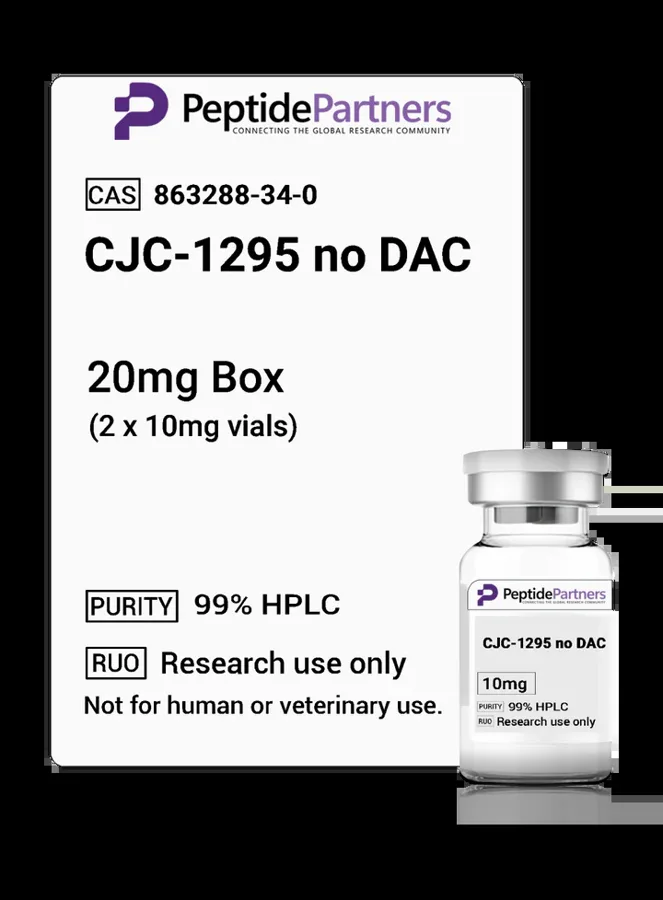
In modern endocrinology and molecular peptide research, the regulation of the somatotropic axis remains a central focus of investigation. Among the synthetic analogs developed to probe growth hormone release, CJC-1295 without DAC—often referred to scientifically as Modified GRF (1-29)—occupies a prominent position in laboratory literature. While structurally related to native hypothalamic growth hormone-releasing hormone (GHRH), this synthetic analog incorporates specific molecular modifications designed to enhance peptide stability and receptor affinity during experimental assays. Researchers examining cellular metabolism, signaling pathways, and neuroendocrine regulation frequently utilize CJC-1295 No DAC as a precision tool for in vitro and animal models.
Historical Context and Molecular Engineering
The lineage of CJC-1295 No DAC traces back to the initial isolation and structural characterization of native GHRH, a 44-amino-acid peptide produced by the hypothalamus to stimulate growth hormone synthesis and secretion from the anterior pituitary gland. Subsequent structural-activity studies revealed that the biological activity of GHRH resided entirely within its first 29 amino acids, leading to the development of sermorelin (GHRH 1-29).
Despite its biological fidelity, native GHRH (1-29) presented a major experimental hurdle: rapid degradation in physiological environments. In biological media, endogenous enzymes—most notably dipeptidyl peptidase-4 (DPP-4)—cleave native peptides between the second and third amino acid residues within minutes. To address this limitation in research settings, investigators engineered a tetra-substituted derivative:
- D-Alanine substitution at position 2: Confers enzymatic resistance against DPP-4 cleavage.
- Glutamine substitution at position 8: Reduces spontaneous deamidation, stabilizing the peptide backbone.
- Alanine substitution at position 15: Improves bioactivity and structural resilience.
- Leucine substitution at position 27: Prevents oxidative degradation commonly observed with native methionine residues.
This resulting 29-amino-acid sequence is scientifically classified as Modified Growth Hormone Releasing Factor 1-29, or Mod GRF (1-29). When synthesized without a Drug Affinity Complex (DAC)—a chemical linker containing maleimidopropionic acid that binds to serum albumin to prolong systemic circulation indefinitely—the compound is designated as CJC-1295 No DAC. This distinction allows the compound to maintain a relatively brief half-life in laboratory models, closely reflecting the natural pulsatile rhythms of endocrine signaling rather than inducing continuous, non-physiological elevation.
Cellular Mechanisms Investigated in Research Models
Preclinical studies evaluate CJC-1295 No DAC primarily to characterize its interaction with the GHRH receptor (GHRH-R), a member of the secretin class of G-protein coupled receptors (GPCRs) located on the plasma membrane of anterior pituitary somatotrophs.
Upon selective binding to GHRH-R, the peptide triggers an intracellular signaling cascade governed by the following sequence:
- Adenylate Cyclase Activation: Receptor activation stimulates the heterotrimeric G-protein subunit (Gsα), which in turn activates the membrane-bound enzyme adenylate cyclase.
- cAMP Accumulation: Adenylate cyclase converts adenosine triphosphate (ATP) into cyclic adenosine monophosphate (cAMP), a critical secondary messenger.
- Protein Kinase A (PKA) Activation: Elevated cAMP levels activate PKA, which phosphorylates downstream target proteins, including the transcription factor CREB (cAMP response element-binding protein).
- Intracellular Calcium Influx: Downstream signaling triggers the opening of voltage-dependent L-type calcium channels, promoting an influx of extracellular calcium ions that facilitates the exocytosis of pre-stored secretory granules.
Because CJC-1295 No DAC does not bypass endogenous somatostatin negative feedback mechanisms, preclinical literature frequently highlights its capacity to study physiological, pulsatile secretory patterns rather than sustained basal exhaustion.
Preclinical Inquiries and Dual-Agonist Models
Laboratory investigations involving CJC-1295 No DAC typically span several key areas of molecular physiology:
- Pulsatile Secretion Dynamics: Assessing how episodic activation of GHRH receptors influences cellular transcription pathways and downstream peptide synthesis over discrete time windows.
- Dual-Receptor Synergy: A significant portion of published literature evaluates CJC-1295 No DAC in combination with growth hormone secretagogue receptor (GHS-R) agonists, such as Ipamorelin. Researchers investigate how simultaneous activation of the GHRH-R (via cAMP/PKA) and the GHS-R (via the phospholipase C/inositol trisphosphate pathway) produces synergistic rather than purely additive cellular responses.
- Cellular Proliferation and Homeostasis: In vitro studies explore whether stabilized GHRH analogs influence somatotroph viability, protein synthesis rates, and protective mitochondrial pathways under oxidative stress conditions.
Sourcing, Vial Selection, and Analytical Standards
For scientific investigations to yield reproducible, peer-reviewable data, the structural identity and purity of research materials must be rigorously established. When sourcing CJC-1295 No DAC from the Peptides Partners catalog, laboratories evaluate several parameters to match material specifications with experimental scope.
Assessing Packaging and Research Formats
Laboratories typically plan procurement around experimental scale, stability, and handling requirements. Standard single-vial allocations are frequently utilized for pilot assays, proof-of-concept tests, or single-point analytical calibrations. Conversely, multi-vial research packs are favored for longitudinal protocols, repeated-measures studies, or cohort-based preclinical designs to ensure consistent batch characteristics across all assay plates.
| Format Configuration | Primary Laboratory Application | Operational Considerations |
|---|---|---|
| Single Lyophilized Vial | Method validation, pilot assays, chromatographic calibration | Minimizes reagent waste during exploratory experimental phases |
| Multi-Vial Research Packs | Longitudinal animal models, high-throughput in vitro screenings | Ensures consistent batch chemistry; allows sequential reconstitution |
Verifying Documentation and Analytical Data
Reliable research requires comprehensive documentation accompanying synthesized lots. Investigational laboratories typically review two core analytical reports prior to reconstituting lyophilized cakes:
- High-Performance Liquid Chromatography (HPLC): Confirms peptide purity by resolving contaminants, synthesis truncation fragments, or degraded sequences, ensuring that the primary peak accurately reflects the active target compound.
- Mass Spectrometry (MS): Confirms the exact molecular mass and sequence identity of the modified peptide, establishing that the four specific amino acid substitutions defining Mod GRF (1-29) are fully intact.
Lyophilized peptides require controlled laboratory storage—typically between -20°C and -80°C—away from light and moisture to prevent premature degradation prior to reconstitution with sterile, laboratory-grade bacteriostatic water or target assay buffers.
Conclusion
CJC-1295 No DAC serves as a well-characterized, reliable tool in the field of molecular endocrinology. By addressing the rapid enzymatic degradation inherent to native GHRH without sacrificing receptor specificity or feedback responsiveness, this engineered analog allows researchers to map somatotroph signaling pathways with exceptional precision. As investigative interest continues to explore targeted secretagogue dynamics, maintaining rigorous analytical verification and appropriate laboratory protocols remains essential to advancing preclinical discovery.
Where to buy CJC-1295 no DAC for research
Peptides Partners lists CJC-1295 no DAC (10mg vials) in 4 pack sizes, all in stock, with price per mg shown for each option. Browse more all products compounds in the Peptides Partners research peptide shop. All products are for laboratory research use only.