
PEPTIDES PARTNERS BLOG · November 11, 2026
The Research Science of Epithalon: Mechanisms, Discovery, and Mitochondrial Frontiers
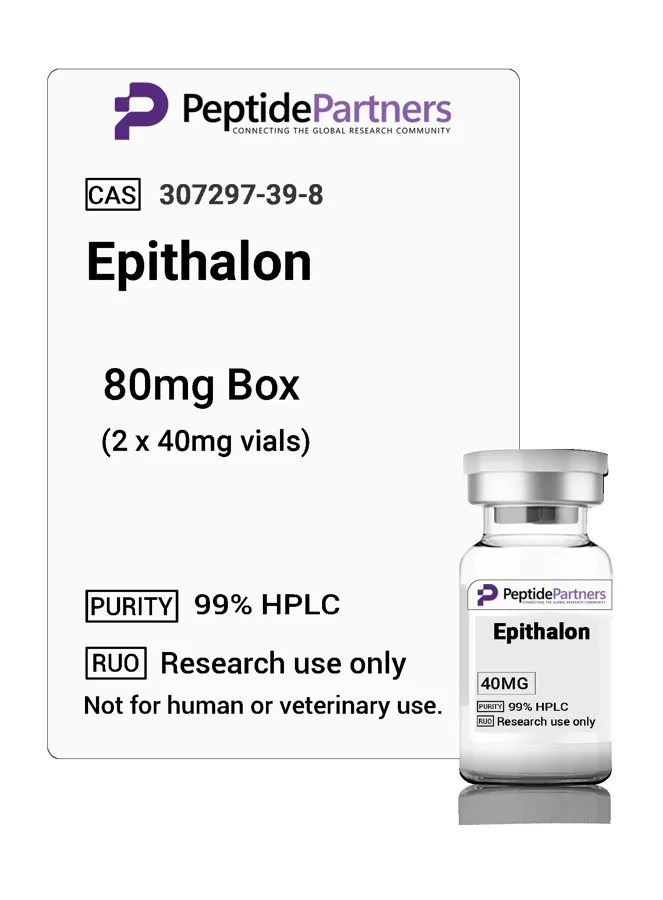
Within peptide biochemistry and cellular gerontology, few synthetic molecules have commanded as sustained a scientific focus as Epithalon (also referred to in scientific literature as Epitalon or AEDG). Classified broadly as a peptide bioregulator and often cataloged alongside agents modulating cellular bioenergetics and mitochondrial resilience, this synthetic tetrapeptide has served as a central reference material in investigations concerning cellular senescence, chromatin structure, and endocrine preservation. Understanding the scientific basis of Epithalon requires examining its origin in Russian peptide biogerontology, its proposed cellular mechanisms, and the rigorous quality control standards necessary when sourcing it for laboratory investigations.
Historical Context: From Pineal Extracts to Synthetic Peptides
The lineage of Epithalon traces back to the late 20th century at the St. Petersburg Institute of Bioregulation and Gerontology, spearheaded by Professor Vladimir Khavinson. Initial laboratory efforts focused on epithalamin, a crude peptide extract derived from the pineal glands of young bovine subjects. Early preclinical studies with epithalamin suggested an ability to modulate endocrine function, enhance melatonin production, and influence overall lifespan markers in rodent populations.
Because animal-derived polypeptide mixtures introduce biological variability and batch inconsistency, researchers sought to isolate and characterize the exact functional sequence driving these observed actions. Through structural analysis, investigators synthesized a short, four-amino-acid peptide that modeled the primary regulatory activity of the parent extract. This synthetic tetrapeptide consists of the sequence L-alanyl-L-glutamyl-L-asparagyl-glycine (Ala-Glu-Asp-Gly, or AEDG). Epithalon emerged as an exact, fully synthesizable reference compound that enabled reproducible, controlled in vitro and in vivo experimentation.
Mechanisms Investigated: Telomerase, Gene Expression, and Mitochondria
Researchers investigating Epithalon study multiple interrelated cellular pathways, ranging from enzymatic activation to organelle-level protection:
1. Telomerase Induction and Cellular Senescence
One of the primary areas of research surrounding Epithalon involves its effect on telomerase, the ribonucleoprotein responsible for maintaining telomere length at the ends of eukaryotic chromosomes. In published in vitro models, particularly human fetal fibroblast cultures, exposure to Epithalon has been studied for its capacity to induce telomerase catalytic subunit (hTERT) mRNA expression. Preclinical assays have evaluated whether this induction allows somatic cells to surpass the classical Hayflick limit, extending their replicative capacity without inducing malignant transformation.
2. Mitochondrial Protection and Oxidative Stress
While historically categorized strictly as an endocrine or pineal peptide, modern biochemical reviews frequently categorize Epithalon alongside mitochondrial regulators. Mitochondrial dysfunction is a hallmark of cellular aging, marked by excessive reactive oxygen species (ROS) leakage and degraded membrane potential. In laboratory models evaluating oxidative damage, Epithalon has been studied for its downstream effects on endogenous antioxidant enzyme pathways, such as superoxide dismutase (SOD) and glutathione peroxidase (GPx). By helping stabilize antioxidant defenses, researchers investigate how AEDG may mitigate mitochondrial DNA degradation and preserve cellular bioenergetic throughput under stressed culture conditions.
3. Epigenetic Regulation and Pineal Melatonin Signaling
Epithalon is also investigated for its structural interactions with histone proteins and nuclear DNA. Research indicates that short peptide bioregulators like AEDG can penetrate cell membranes, translocate to the nucleus, and interact directly with chromatin. This interaction is hypothesized to alter histone acetylation patterns, thereby de-repressing inactive genes associated with tissue maintenance. In pineal explant models, this mechanism has been observed in conjunction with normalized nocturnal melatonin secretion, offering insight into the cross-talk between circadian rhythm regulation and metabolic homeostasis.
Key Experimental Findings in Laboratory Models
Over several decades of preclinical investigation, Epithalon has been tested across an array of laboratory systems:
- In Vitro Replicative Assays: Studies on cultured human somatic cells have tracked chromosome integrity, analyzing whether telomerase upregulation via Epithalon reduces end-to-end chromosomal fusions and downstream apoptotic signaling.
- Murine Longevity and Tumorigenesis Studies: In female Swiss mice and older female rodents, researchers tracked spontaneous tumor development and survivability over time. These models examined whether long-term periodic exposure to the peptide altered the incidence of mammary and endocrine tumors while preserving immune cell function.
- Retinal and Ocular Degeneration Models: Additional research explored Epithalon in models of hereditary retinal degeneration (such as in Campbell rats), where scientists evaluated retinal bioelectrical activity and structural preservation of photoreceptor layers.
Sourcing Epithalon: Comparing Documentation and Vial Formats
For research facilities and analytical laboratories, data reproducibility depends entirely on the purity, identity, and stability of the underlying peptide material. When acquiring Epithalon for research use through Peptides Partners, scientists should methodically evaluate multiple physical and analytical parameters before initiating study protocols.
| Analytical Criterion | Evaluation Standard | Research Relevance |
|---|---|---|
| Analytical Identity | Mass Spectrometry (ESI-MS / MALDI-TOF) | Confirms the exact expected molecular weight (390.35 g/mol) of the Ala-Glu-Asp-Gly sequence. |
| Chemical Purity | High-Performance Liquid Chromatography (HPLC) | Quantifies the percentage of target peptide relative to synthesis byproducts, truncated sequences, or solvent residues. |
| Lyophilization Quality | Consistent, sterile cake/powder | Ensures proper removal of moisture to prevent hydrolytic degradation during cold storage. |
| Batch Traceability | Lot-specific Certificate of Analysis | Guarantees consistency across multi-phase longitudinal studies. |
Selecting Appropriate Pack Formats
Depending on the scope of the investigation, researchers must consider vial configurations carefully. Because reconstituted peptides are subject to degradation even at refrigerated temperatures, single large vials may expose the compound to repeated freeze-thaw cycles if protocols require incremental sampling. Multi-vial packs offered in the Peptides Partners catalog allow investigators to reconstitute only the quantity required for immediate experimental windows, leaving the remaining stock in its stable, lyophilized state under proper cold-chain conditions (-20°C).
Conclusion
Epithalon remains an important focal point within experimental gerontology and mitochondrial research. Its defined four-amino-acid structure, paired with a distinct footprint spanning telomerase transcription, antioxidant enzyme modulation, and pineal regulation, ensures its continued presence in cellular aging laboratories. To ensure scientific integrity, researchers must verify their reference peptides using comprehensive HPLC and mass spectrometry documentation, maintaining strict research-use-only laboratory protocols to further clarify AEDG’s complex molecular behavior.
Where to buy Epithalon for research
Peptides Partners lists Epithalon (40mg vials) in 3 pack sizes, all in stock, with price per mg shown for each option. Browse more mitochondrial compounds in the Peptides Partners research peptide shop. All products are for laboratory research use only.