
PEPTIDES PARTNERS BLOG · November 11, 2026
The Research Science of BPC-157: Cellular Repair Pathways, Discovery, and Laboratory Sourcing
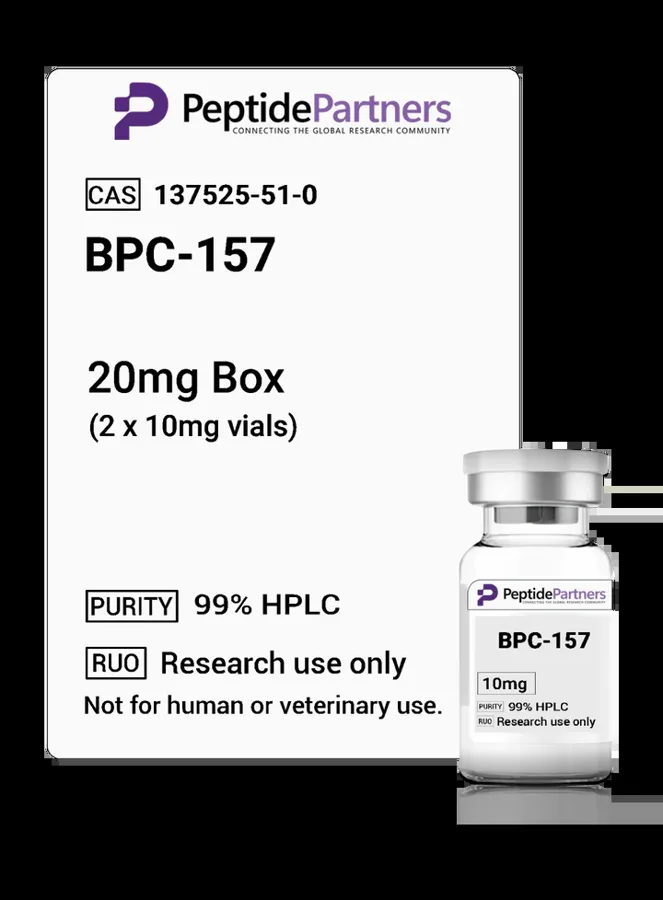
In the field of regenerative biochemistry and molecular biology, synthetic peptides targeting cytoprotection and tissue remodeling remain a central focus of preclinical investigation. Among these sequences, Body Protection Compound-157 (BPC-157) has gathered sustained interest within the category of cellular repair. Classified strictly for research use only, BPC-157 is an engineered pentadecapeptide investigated in laboratory settings for its interactions with extracellular matrix organization, vascular growth signaling, and cellular survival pathways. Understanding the scientific backdrop, mechanisms of action, and procurement standards for this peptide provides researchers with an objective framework for ongoing preclinical study design.
Discovery and Structural Characterization of BPC-157
BPC-157 is a 15-amino-acid synthetic sequence derived from a broader, naturally occurring peptide complex initially isolated from human gastric juice, known historically in the literature as Body Protection Compound (BPC). The structural sequence of BPC-157 consists of the primary sequence Gly-Glu-Pro-Pro-Pro-Gly-Lys-Pro-Ala-Asp-Asp-Ala-Gly-Leu-Val. With a molecular formula of C62H98N16O22 and a molecular weight of approximately 1419.5 Da, it represents an optimized stable fragment of the parent biological compound.
Early laboratory investigations in the 1990s sought to identify why native gastric protective compounds demonstrated resilience in harsh, low-pH environments. While many linear signaling peptides undergo rapid enzymatic degradation when exposed to gastric enzymes or elevated temperatures, structural analysis of BPC-157 revealed relative conformational stability. This intrinsic molecular resistance to proteolysis led researchers to isolate the 15-residue sequence for dedicated in vitro and in vivo animal models assessing general cellular preservation and repair biology beyond the gastrointestinal tract.
Primary Mechanisms Investigated in Preclinical Models
Research into BPC-157 focuses on multiple interrelated biochemical pathways associated with tissue architecture and stress adaptation. While experimental data remain primarily preclinical, published studies have highlighted several distinct mechanistic avenues:
Angiogenesis and Vascular Endothelial Growth Factor (VEGF) Signaling
A prominent line of investigation centers on the peptide’s interaction with the angiogenic cascade. In cellular assays and rodent injury models, researchers have studied BPC-157 for its capacity to upregulate mRNA and protein expression of Vascular Endothelial Growth Factor (VEGF) alongside its receptor, VEGFR2. By stimulating early capillary sprout formation and endothelial cell migration, the peptide has been observed to modulate the revascularization phase that is critical to cellular repair in poorly perfused tissues.
Nitric Oxide (NO) System Homeostasis
Preclinical studies have consistently documented interactions between BPC-157 and the endogenous nitric oxide system. Investigators have noted that the peptide acts modulatory rather than strictly agonistic or antagonistic. In models where endothelial nitric oxide synthase (eNOS) is disrupted or nitric oxide levels are chemically manipulated using agents like L-NAME (an eNOS inhibitor) or L-arginine (a nitric oxide precursor), BPC-157 has been observed to stabilize blood pressure deviations and maintain local microvascular flow, suggesting a regulatory effect on vascular tone and endothelial integrity.
Fibroblast Activation and Extracellular Matrix (ECM) Dynamics
At the cellular level, repair pathways depend on the coordinated behavior of fibroblasts and the deposition of collagen. Laboratory studies using cultured tenocytes and dermal fibroblasts have assessed BPC-157 for its influence on the focal adhesion kinase (FAK) and paxillin signaling pathways. Activation of these pathways correlates with enhanced cell motility, dose-dependent proliferation, and the transcription of type I collagen. Researchers monitor these parameters to gauge how the peptide influences the structural tensile strength of matrix tissues over defined observation windows.
Key Experimental Domains in Cellular Repair Literature
The published literature surrounding BPC-157 covers a wide range of specialized experimental targets. Rather than representing approved therapeutic applications, these domains illustrate the diversity of basic science models currently evaluated by academic and industrial institutions:
- Musculoskeletal and Connective Tissue Models: Preclinical research frequently utilizes BPC-157 to evaluate recovery markers in transected or crushed tendons, ligaments, and skeletal muscle fibers. Experimental protocols assess mechanical load resistance, cellular density, and collagen alignment in comparison to untreated controls.
- Gastrointestinal Mucosal Integrity: Given its discovery origins, BPC-157 is widely studied in models of mucosal damage, including chemically induced gastric ulcers, intestinal anastomosis, and colonic inflammation. Researchers evaluate its effects on tight junction proteins, mucosal thickness, and inflammatory cytokine suppression (such as TNF-alpha and IL-6).
- Neurovascular and Central Nervous System Models: Emerging exploratory studies examine the peptide’s role in models of peripheral nerve crush and traumatic brain injury, assessing markers of axonal regeneration, functional motor recovery scoring in rodents, and neuroinflammation attenuation.
Sourcing Standards: Evaluating Vial Configurations and Documentation
For research institutions and laboratory teams designing controlled protocols, peptide consistency is critical to generating reproducible data. Sourcing BPC-157 from catalogs such as Peptides Partners requires careful consideration of experimental scale, lyophilization quality, and analytical transparency.
| Analytical Parameter | Method of Evaluation | Significance in Research Applications |
|---|---|---|
| Chemical Identity | Mass Spectrometry (MS) | Confirms molecular mass aligns with the target pentadecapeptide sequence without truncated variants. |
| Purity Profile | High-Performance Liquid Chromatography (HPLC) | Verifies absence of synthesis byproducts, residual deprotection species, or unwanted diastereomers. |
| Physical State | Lyophilized Cake Integrity | Ensures proper vacuum freeze-drying for stability, moisture control, and long-term shelf storage. |
Selecting Vial Configurations
Experimental designs often dictate specific reconstituted volumes and concentration curves. Sourcing formats typically feature single vials or multi-vial packs (such as 5-vial or 10-vial sets). Evaluating vial packaging is essential for:
- Limiting Freeze-Thaw Cycles: Selecting smaller individual vial quantities helps laboratories reconstitute only what is needed for a single experimental run, preserving peptide stability.
- Batch Uniformity: Sourcing multi-vial packs from a unified production run ensures that comparative groups across longitudinal studies receive uniform material from the same synthesis lot.
- Reconstitution Compatibility: Ensuring vials are sealed under inert gas (such as nitrogen) prevents oxidation and facilitates clean resuspension in standard laboratory diluents, such as bacteriostatic water or sterile physiological saline.
Documentation and Verification
A rigorous catalog provider must support research workflows with accessible, batch-specific analytical records. When procuring peptides for cellular repair research, investigators routinely confirm that documentation includes lot-specific HPLC chromatograms and electrospray ionization mass spectrometry (ESI-MS) spectra. These metrics allow primary investigators to establish baseline controls, satisfy institutional review standards, and eliminate experimental artifacts resulting from chemical degradation.
Conclusion
BPC-157 continues to occupy a prominent position in laboratory research focused on cellular repair, tissue remodeling, and cytoprotective signaling. Preclinical literature points toward diverse influences on VEGF pathways, microvascular regulation, and collagen organization, making it an active candidate for continuous in vitro and ex vivo inquiry. Because the peptide is non-approved for diagnostic or therapeutic use in humans, research organizations rely on strict analytical criteria, stable packaging formats, and verified analytical documentation from trusted research catalogs to support valid scientific discovery.
Where to buy BPC-157 for research
Peptides Partners lists BPC-157 (10mg vials) in 4 pack sizes, all in stock, with price per mg shown for each option. Browse more cellular repair compounds in the Peptides Partners research peptide shop. All products are for laboratory research use only.