
PEPTIDES PARTNERS BLOG · November 11, 2026
The Molecular Science of GLP-1 Semaglutide: Mechanisms, Incretin History, and Research Sourcing Standards
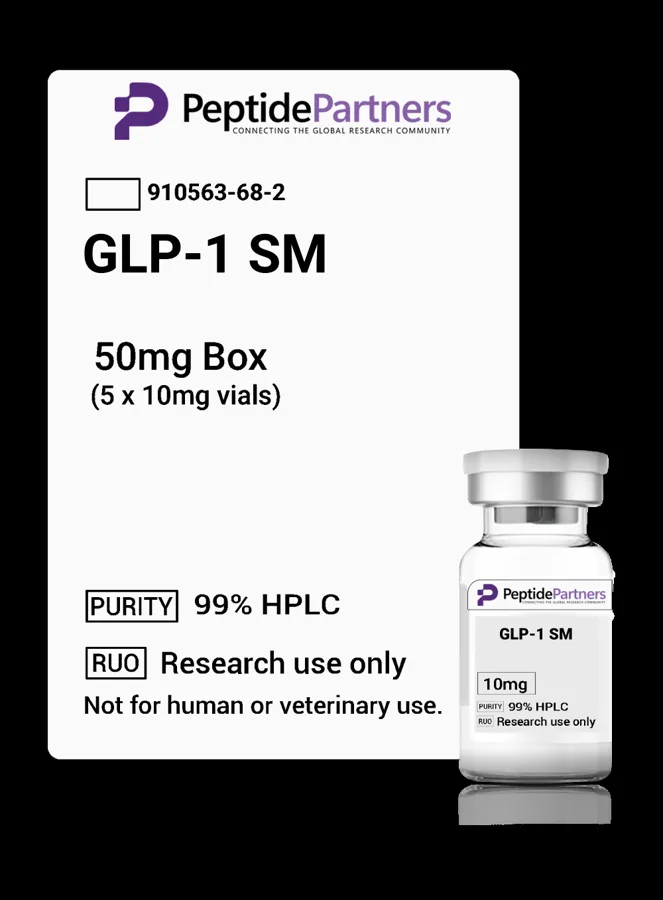
Incretin biology represents one of the most extensively published fields within modern metabolic research. At the center of this discipline is glucagon-like peptide-1 (GLP-1), an endogenous peptide hormone secreted by intestinal L-cells in response to nutrient ingestion. Over the past three decades, structural analogs of this hormone have garnered substantial academic and clinical interest. Among these synthetic peptides, Semaglutide has emerged as a primary subject of investigation for laboratories studying glycemic regulation, energy balance, neuroendocrine signaling, and cardiovascular physiology. This article provides an educational overview of the discovery of Semaglutide, the cellular mechanisms examined in preclinical literature, and the critical analytical standards investigators evaluate when sourcing research-grade compounds from suppliers such as Peptides Partners.
Historical Discovery and the Engineering of Incretin Analogs
The incretin effect—the physiological observation that oral glucose triggers a significantly greater insulin release than an equivalent intravenous glucose infusion—was first characterized in the mid-20th century. Subsequent isolation of gastric inhibitory polypeptide (GIP) and the cloning of the proglucagon gene led to the identification of native GLP-1(7-36) amide in the 1980s. While native GLP-1 demonstrated potent insulinotropic activity, its experimental utility was severely constrained by pharmacokinetic limitations.
Native GLP-1 exhibits an endogenous half-life of approximately 1.5 to 2 minutes in circulation. The rapid clearance is primarily driven by dipeptidyl peptidase-4 (DPP-4), an enzyme that cleaves the N-terminal dipeptide (His7-Ala8), rendering the peptide biologically inactive. Neutral endopeptidase (NEP 24.11) and rapid renal filtration further reduce its systemic duration.
To facilitate sustained downstream investigation without continuous intravenous perfusion, molecular pharmacologists synthesized long-acting analogs. Early iterations, such as Exendin-4 and Liraglutide, established the feasibility of DPP-4 resistance and albumin-binding modifications. Semaglutide represents an advanced rational design iteration characterized by three strategic structural modifications:
- Position 8 Substitution: Native L-alanine is replaced by the synthetic, non-proteinogenic amino acid alpha-aminoisobutyric acid (Aib), providing steric hindrance that shields the peptide from DPP-4 enzymatic degradation.
- Lysine Acylation: A C18 fatty di-acid chain is conjugated to the lysine residue at position 26 via a hydrophilic spacer containing two 8-amino-3,6-dioxaoctanoic acid (Ado) units and a glutamic acid residue.
- Position 34 Mutation: Lysine at position 34 is substituted with arginine to ensure selective mono-acylation exclusively at position 26 during chemical synthesis.
The C18 fatty di-acid moiety facilitates reversible, high-affinity binding to circulating serum albumin. This non-covalent albumin association extends the functional half-life to approximately 165 hours in human pharmacokinetics and roughly 24 to 48 hours in rodent models, creating a stable chemical probe for longitudinal research.
Cellular and Intracellular Mechanisms Investigated
Investigators utilize Semaglutide to examine canonical and non-canonical signaling cascades governed by the GLP-1 receptor (GLP-1R), a class B secretin-like G protein-coupled receptor (GPCR). Binding studies indicate that the peptide induces specific conformational shifts across the receptor’s extracellular and transmembrane domains.
Pancreatic Islet Signaling
In pancreatic beta-cell models, GLP-1R activation stimulates the stimulatory G-protein subunit (G-alpha-s), driving adenylate cyclase activity and generating intracellular cyclic adenosine monophosphate (cAMP). Elevated cAMP engages two primary downstream pathways: protein kinase A (PKA) and exchange protein directly activated by cAMP 2 (Epac2). In the presence of elevated ambient glucose, this cascade closes ATP-sensitive potassium (K-ATP) channels, depolarizes the plasma membrane, prompts voltage-gated calcium entry, and triggers regulated insulin granule exocytosis. Concurrently, researchers observe GLP-1R signaling downregulating glucagon transcription in pancreatic alpha cells, predominantly through a glucose-dependent paracrine mechanism mediated by local somatostatin release from delta cells.
Central Nervous System Pathways
Beyond peripheral metabolic tissues, GLP-1 receptors are widely expressed across the central nervous system, particularly within the nodose ganglion, area postrema, nucleus of the solitary tract (NTS), and the arcuate nucleus of the hypothalamus. Preclinical rodent models indicate that peripherally administered Semaglutide interacts with circumventricular organs that lack a complete blood-brain barrier. Functional imaging and histological assays demonstrate direct and indirect activation of pro-opiomelanocortin (POMC) and cocaine- and amphetamine-regulated transcript (CART) neurons, alongside concurrent suppression of neuropeptide Y (NPY) and agouti-related peptide (AgRP) transcription. Researchers study these neural networks to delineate the biological architecture of satiety signaling, gastric motility regulation, and inter-organ energy homeostasis.
Primary Areas of Contemporary Research
Academic and industrial laboratories study GLP-1 analogs across several distinct experimental models:
| Research Category | Primary Biological Pathways Examined | Common Experimental Models |
|---|---|---|
| Metabolic Homeostasis | Insulin sensitivity, beta-cell preservation, hepatic lipid accumulation | High-fat diet (HFD) rodents, db/db mice, primary islet cultures |
| Cardiovascular Biology | Endothelial nitric oxide synthase (eNOS) phosphorylation, vascular inflammation markers | ApoE-deficient mice, endothelial cell line assays |
| Neurobiology | Microglial activation, neuroinflammatory cytokines, dopaminergic signaling | Neurodegenerative rodent models, hypothalamic slice cultures |
Evaluating Documentation and Laboratory Sourcing Standards
When procuring solid-phase synthesized peptides for in vitro or in vivo experimentation, data reproducibility depends entirely on chemical purity and exact molecular characterization. Material intended for laboratory investigation must meet rigorous analytical criteria before introduction into an experimental matrix.
Analytical Testing: HPLC and Mass Spectrometry
Reliable research compounds must be supported by lot-specific analytical documentation. The two foundational quality metrics are:
- High-Performance Liquid Chromatography (HPLC): Measures chromatographic purity by separating target peptide sequences from truncated sequences, deletion fragments, and residual deprotection byproducts. Researchers evaluate chromatograms for sharp, symmetrical peaks without unresolved baseline shoulders.
- Electrospray Ionization Mass Spectrometry (ESI-MS) or MALDI-TOF: Confirms identity by verifying that the observed monoisotopic or average mass aligns precisely with the theoretical molecular weight of the peptide (approximately 4113.58 Da for Semaglutide free acid).
Comparing Vial Configurations and Aliquot Planning
Lyophilized peptides are susceptible to physical degradation, hydrolytic cleavage, and aggregation if subjected to repeated thermal fluctuations. When sourcing from catalogs like Peptides Partners, principal investigators typically evaluate pack sizes and mass-per-vial metrics relative to experimental timelines. Procuring multi-vial packs with lower mass denominations per vial minimizes the necessity for repeated freeze-thaw cycles following reconstitution with laboratory-grade bacteriostatic water or sterile saline. Maintaining single-use aliquots at appropriate storage temperatures (-20°C or -80°C for long-term stability) ensures consistent receptor binding affinity across longitudinal protocols.
Summary of Research Considerations
The study of GLP-1 receptor agonism has reshaped fundamental models of metabolic, endocrine, and neural communication. Semaglutide continues to serve as an indispensable reference compound for investigators exploring incretin biology, receptor kinetics, and peptide stabilization technologies. As research expands into multi-agonist designs and novel organ systems, the utilization of verified, analytically documented materials from professional research suppliers remains essential for generating valid, reproducible scientific literature.
Where to buy GLP-1 Semaglutide for research
Peptides Partners lists GLP-1 Semaglutide (10mg vials) in 4 pack sizes, all in stock, with price per mg shown for each option. Browse more metabolics compounds in the Peptides Partners research peptide shop. All products are for laboratory research use only.