
PEPTIDES PARTNERS BLOG · November 11, 2026
DSIP Research Science: Discovery, Mechanisms, and Laboratory Sourcing Considerations
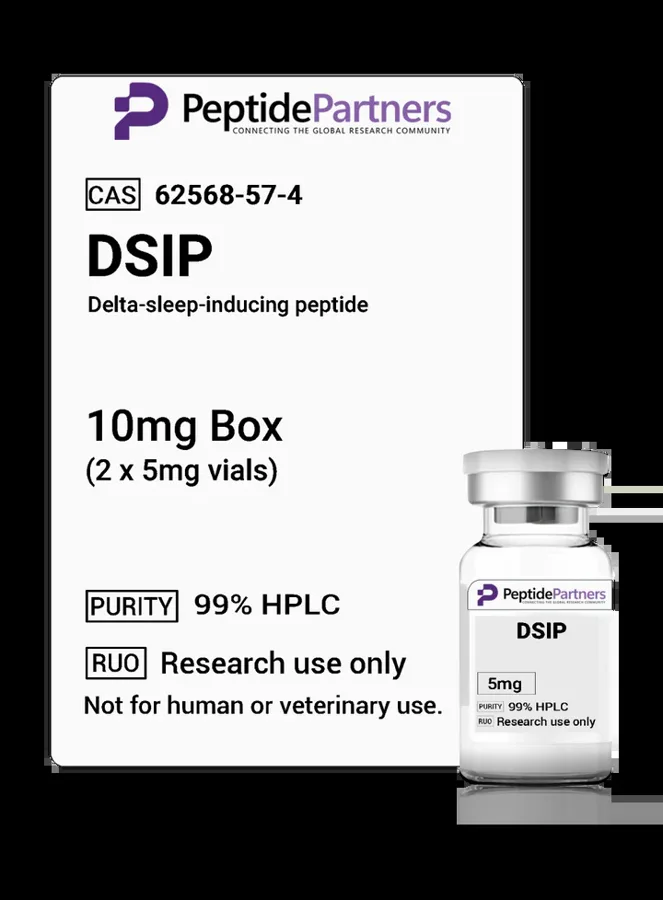
Delta Sleep-Inducing Peptide, commonly abbreviated as DSIP, is an endogenous nonapeptide that has intrigued neurochemists, endocrinologists, and behavioral scientists since the late 1970s. Discovered during investigations into humoral factors governing natural sleep cycles, DSIP occupies a unique place in peptide biochemistry. Found across diverse catalog categories—including the general All Products research section at Peptides Partners—DSIP is supplied exclusively as a research-use-only reference material. This article provides an educational exploration of the discovery, molecular mechanisms, preclinical literature, and technical criteria involved in sourcing this compound for controlled laboratory research.
Historical Background: The Isolation of a Natural Somnogenic Factor
The history of DSIP traces back to 1977, when a Swiss research team led by Marcel Monnier at the University of Basel sought to understand the biochemical triggers of sleep. By applying low-frequency electrical stimulation to the thalamus of donor rabbits, the researchers induced natural slow-wave electrical patterns. Blood collected from the cerebral venous system of these sleeping animals was then ultrafiltered and dialyzed to isolate active fractions capable of inducing similar electroencephalographic (EEG) patterns in recipient animals.
Through sequential chromatographic separation and bioassays, Monnier’s team isolated a specific peptide composed of nine amino acid residues: Trp-Ala-Gly-Gly-Asp-Ala-Ser-Gly-Glu (molecular weight approximately 848.81 Da). The compound was officially designated Delta Sleep-Inducing Peptide due to its demonstrated ability to enhance delta-frequency (0.5–4 Hz) slow-wave activity on recipient EEGs. The discovery challenged the prevailing notion that sleep was mediated purely by classical monoaminergic and cholinergic neurotransmitters, highlighting instead the regulatory potential of low-molecular-weight neuropeptides.
Molecular Profile and Investigated Biological Mechanisms
Unlike classical hormones that follow straightforward receptor-ligand cascades, DSIP exhibits complex, modulatory biological dynamics. Decades of biochemical research have generated several models explaining how this nonapeptide interacts with central and peripheral regulatory networks:
- Central Neuromodulation: Early binding studies indicated that DSIP crosses the blood-brain barrier via passive and carrier-mediated transport. Within central nervous tissue, it has been observed to modulate concentrations of serotonin (5-HT), dopamine, and gamma-aminobutyric acid (GABA), often stabilizing neuronal membrane potential rather than acting as a direct receptor agonist.
- Endocrine Axis Modulation: Investigators have extensively explored DSIP’s interactions with the hypothalamic-pituitary-adrenal (HPA) and hypothalamic-pituitary-gonadal (HPG) axes. Preclinical assays suggest that DSIP can attenuate acute stress-induced surges of adrenocorticotropic hormone (ACTH) and corticosterone, while exhibiting variable influences on growth hormone (GH) and luteinizing hormone (LH) release under specific baseline conditions.
- Antioxidant and Bioenergetic Enzymes: Later research, particularly in European laboratories, examined DSIP’s capacity to alter mitochondrial respiration and oxidative stress parameters. In animal models, exposure to DSIP analogs was associated with changes in superoxide dismutase (SOD) activity and preservation of oxidative phosphorylation efficiency during physiological stress.
Key Areas of Preclinical Investigation
In modern laboratory models, DSIP continues to serve as an investigational tool across three primary domains of neurobiology and cellular physiology:
1. Sleep Architecture and EEG Synchronization
The primary area of published literature concerns sleep architecture. When administered in animal models (including rodents and non-human primates), DSIP has been studied for its capacity to promote non-rapid eye movement (NREM) sleep and enhance low-frequency delta power without causing cataleptic immobilization or altering baseline diurnal parameters. Investigators evaluate whether it acts as a true somnogen or as an adaptogenic modulator of circadian gating mechanisms.
2. Stress Response and Autonomic Regulation
Preclinical protocols frequently utilize DSIP to evaluate autonomic responses to acute stressors, such as physical restraint, thermal shock, or emotional agitation. Researchers have measured biomarkers including heart rate variability, arterial blood pressure stabilization, and monoamine turnover in cortical and limbic structures, hypothesizing an overarching homeostatic buffering role.
3. Neuroprotection and Peptide Stability
Because native DSIP is subject to enzymatic degradation by endogenous aminopeptidases, structural biology labs analyze its breakdown pathways. Investigations into synthetic modifications, phosphorylated derivatives, and protected analogs aim to map how peptide cleavage influences cellular uptake, receptor cross-talk, and protective signaling in models of metabolic deprivation.
Sourcing DSIP for Laboratory Use: Comparative Evaluation
When obtaining DSIP from the Peptides Partners catalog, research teams must carefully evaluate product formats, experimental timelines, and analytic documentation to maintain reproducible study conditions.
| Format / Configuration | Primary Application | Analytical Documentation Required |
|---|---|---|
| Single Vials (Individual Units) | Pilot studies, assay calibration, single-run chromatographic verification. | Lot-specific HPLC and Mass Spectrometry (MS). |
| Multi-Vial Packs (5 to 10 Units) | Controlled experimental series, longitudinal cell culture protocols, multi-cohort animal models. | Batch-matched Certificate of Analysis (CoA) confirming cross-vial consistency. |
Evaluating Technical Documentation
To avoid confounding data caused by chemical impurities or truncated synthesis sequences, procurement protocols should verify two analytical standards for every lot:
- High-Performance Liquid Chromatography (HPLC): Confirms overall peptide purity by separating target molecules from synthesis byproducts, such as incomplete peptide chains or residual deprotection agents.
- Mass Spectrometry (MS): Validates absolute identity by matching observed mass-to-charge ratios against the theoretical molecular weight of DSIP (848.81 g/mol).
Laboratory Storage and Reconstitution Parameters
DSIP is supplied as a lyophilized (freeze-dried) white powder to maximize shelf life. Laboratories must observe standard peptide handling procedures:
- Maintain lyophilized vials at -20°C in a desiccated environment protected from light.
- Allow the vial to reach room temperature before opening to avoid condensation onto the dry cake.
- Reconstitute under sterile laminar flow hoods using designated laboratory solvents, such as bacteriostatic water or sterile buffered saline, strictly aligned with in vitro or animal study requirements.
- Aliquot working solutions into single-use containers to prevent degradation caused by repeated freeze-thaw cycles.
Summary
Delta Sleep-Inducing Peptide remains an essential molecular tool for dissecting the interplay between neuropeptidergic signaling, sleep architecture, and neuroendocrine equilibrium. By securing verified reference standards with transparent analytical documentation from Peptides Partners, academic and independent researchers can ensure rigorous experimental integrity across in vitro assays and preclinical investigations.
Where to buy DSIP for research
Peptides Partners lists DSIP (5mg vials) in 3 pack sizes, all in stock, with price per mg shown for each option. Browse more all products compounds in the Peptides Partners research peptide shop. All products are for laboratory research use only.