
PEPTIDES PARTNERS BLOG · November 11, 2026
The Research Science of BPC-157 and TB-500 Dual Formulations in Cellular Repair
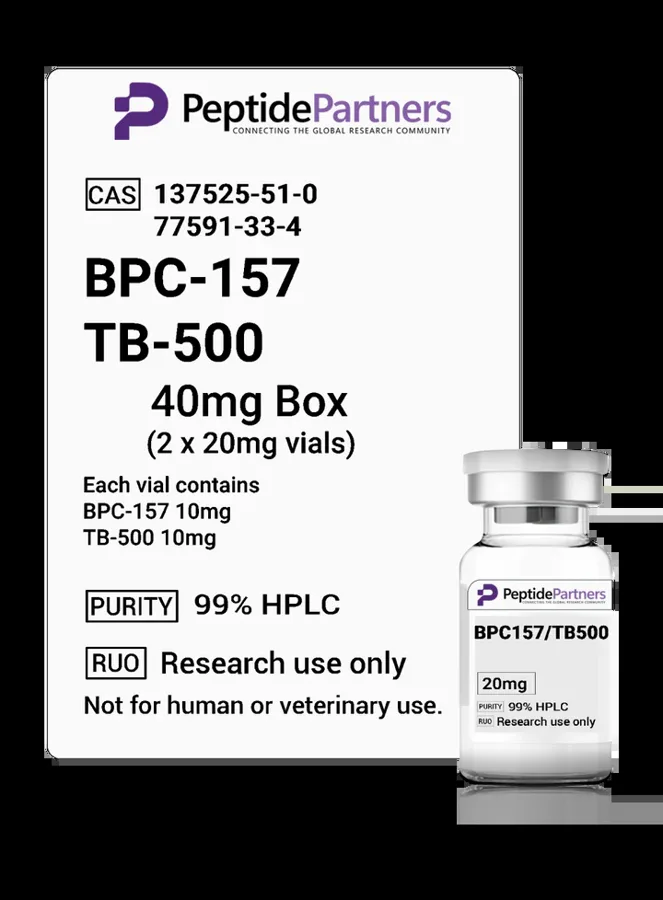
Within the expanding field of regenerative and cellular biology, dual-peptide formulations have garnered substantial interest among laboratory researchers. Among these, the combination of BPC-157 and TB-500 represents one of the most frequently examined co-formulations in preclinical tissue repair models. Both peptides influence cellular dynamics, cell motility, and tissue regeneration, yet they operate through distinct, non-overlapping biochemical pathways. Investigating these compounds within a single experimental paradigm allows researchers to observe how complementary molecular actions interact in controlled environments.
Historical Discovery and Biochemical Origins
To understand the rationale behind studying a combined formulation, it is essential to review the discovery and molecular origins of each peptide independently.
BPC-157, designated scientifically as Body Protection Compound-157, is a 15-amino-acid synthetic peptide derived from a larger native peptide found in human gastric juice. Initially isolated during academic studies exploring gastric mucosal cytoprotection, researchers observed that this partial sequence retained stability in gastric acid and exhibited broad systemic biological signaling properties in laboratory rodents. Subsequent research demonstrated that its influence extended well beyond the gastrointestinal tract, engaging endothelial cells, fibroblasts, and osteotendinous junctions.
TB-500, conversely, is a synthetic derivative of the naturally occurring 43-amino-acid protein Thymosin Beta-4 (Tβ4). Isolated originally from bovine thymus tissue, Thymosin Beta-4 was recognized as the principal actin-sequestering molecule in eukaryotic cells. TB-500 encompasses the active core sequence (specifically amino acids 17–23, often synthesized as an acetylated heptapeptide fragment) responsible for actin binding, cell migration, and tissue organization. Because TB-500 retains the critical active site of the larger parent protein, it has served as an accessible surrogate in structural and cellular biology investigations.
Molecular Mechanisms of Cellular Repair Under Investigation
In preclinical models of cellular repair, researchers focus heavily on the discrete biological cascades engaged by each molecule. Rather than redundant mechanisms, published literature suggests BPC-157 and TB-500 address different facets of the cellular response to structural disruption.
BPC-157 and Vascular Signal Modulation
In vitro and animal models investigating BPC-157 indicate that its activity centers primarily on vascular dynamics and extracellular matrix modulation. Researchers observe significant interactions between BPC-157 and the following cellular markers:
- Angiogenic Signaling: BPC-157 has been studied for its ability to modulate the expression of vascular endothelial growth factor (VEGF) and early growth response 1 (EGR-1), key components in neo-vascularization and microvascular branching.
- Nitric Oxide (NO) Homeostasis: Laboratory analyses have documented the peptide’s capacity to interact with the nitric oxide synthase system, stabilizing local hemodynamics without inducing systemic hypotension in test models.
- Focal Adhesion Kinase (FAK) Activation: Studies examining cell culture scratch models suggest BPC-157 promotes the phosphorylation of FAK and paxillin, which are structural proteins vital for fibroblast migration and tissue adhesion.
TB-500 and Actin Dynamics
TB-500 operates predominantly at the level of the cytoskeleton and cellular motility:
- G-Actin Regulation: As an actin-binding peptide, TB-500 prevents globular actin (G-actin) from prematurely polymerizing into filamentous actin (F-actin), maintaining a ready pool of cellular structural components required for rapid cytoskeletal reorganization.
- Cellular Migration and Chemotaxis: By facilitating cytoskeletal remodeling, TB-500 has been shown to support the directional migration of keratinocytes, endothelial cells, and stem cells toward regions of mechanical stress or cellular deficit in laboratory matrices.
- Inflammatory Cytokine Balance: Preclinical investigations suggest TB-500 can influence down-regulation of nuclear factor-kappa B (NF-κB) transcription, leading to observed alterations in the release of pro-inflammatory cytokines in tissue cultures.
Comparative Overview of BPC-157 and TB-500
The following table outlines the distinct molecular characteristics that investigators assess when evaluating these two cellular repair candidates side-by-side:
| Characteristic | BPC-157 | TB-500 |
|---|---|---|
| Peptide Type | Pentadecapeptide (15 amino acids) | Synthetic fragment of Thymosin Beta-4 |
| Native Source Analog | Human gastric juice protein | Thymic tissue / intracellular actin pool |
| Primary Molecular Target | Growth factor pathways (VEGF, FAK, NO) | G-actin sequestration and cytoskeletal organization |
| Primary Research Focus | Angiogenesis, tendon-to-bone junctions, mucosal integrity | Cellular motility, actin remodeling, myofiber migration |
| Common Preclinical Assays | Vascular sprout assays, mechanical load testing | Scratch wound migration assays, cytoskeletal staining |
Theoretical Synergy in Experimental Models
The co-formulation of BPC-157 and TB-500 in a single combination vial is designed specifically to test hypotheses surrounding multifactored repair environments. Cellular regeneration requires two fundamental steps: the structural cell population must migrate to the affected region, and an adequate vascular supply must be established to provide metabolic support for sustained proliferation and matrix deposition.
In experimental protocols, researchers frequently study whether the actin-facilitated cell motility promoted by TB-500 operates synergistically alongside the pro-angiogenic, growth-factor-sensitizing actions attributed to BPC-157. Evaluating both peptides simultaneously eliminates compounding variables associated with separate preparation steps, enabling consistent stoichiometric exposure across experimental batches.
Evaluating Documentation and Pack Formats at Peptides Partners
When sourcing dual-peptide materials for research applications, verifying batch consistency is critical. Multi-peptide preparations introduce analytical complexity that single-compound materials do not possess. Investigators procuring materials from the Peptides Partners catalog should consider several standardized criteria:
Dual-Analyte Analytical Verification
Analytical testing of combination vials requires independent identification and quantitation of each active sequence. High-Performance Liquid Chromatography (HPLC) must clearly resolve separate, distinct retention peaks for BPC-157 and TB-500 without co-elution or degradation artifacts. Additionally, Mass Spectrometry (MS) should validate the precise molecular weights of both peptides within the single lyophilized matrix, confirming that neither sequence underwent modification during co-lyophilization.
Comparing Pack Formats for Protocol Design
Peptides Partners provides combination materials in various vial pack quantities to accommodate different experimental designs:
- Standard Single Vials: Suited for baseline analytical verification, solubility assays, or pilot in vitro titration curves where small quantities prevent unnecessary re-freezing cycles.
- Multi-Vial Research Packs: Ideal for longitudinal animal models or extensive cellular cohorts where all samples must originate from an identical synthesis lot to minimize inter-assay variability.
All materials are supplied strictly as lyophilized compounds for research, development, and laboratory testing purposes only. Ensuring adequate documentation, verified cold-chain stability, and rigorous analytical transparency supports the accuracy and reproducibility of modern cellular repair research.
Where to buy Combo Vial: BPC-157/TB-500 for research
Peptides Partners lists Combo Vial: BPC-157/TB-500 (20mg vials) in 3 pack sizes, all in stock, with price per mg shown for each option. Browse more cellular repair compounds in the Peptides Partners research peptide shop. All products are for laboratory research use only.